One Billion Rising — Strike, Dance, Rise!


One in Three Women on the Planet will be
Raped or Beaten in Her Lifetime.

One Billion Women Violated is an Atrocity.

One Billion Women Dancing is a Revolution.

 
On February 14, 2013, join one billion women and men around the world who will dance together to end violence against women. Find an event near you, or dance on your own, but please, get involved.

ONE BILLION RISING IS:

  • A global strike
  • An invitation to dance
  • A call to men and women to refuse to participate in the status quo until rape and rape culture ends
  • An act of solidarity, demonstrating to women the commonality of their struggles
    and their power in numbers
  • A refusal to accept violence against
    women and girls as a given
  • A new time and a new way of being


One Billion Rising (Short Film)

TRIGGER WARNING: violence, abuse.
A film by Eve Ensler and Tony Stroebel
One billion women violated is an atrocity. One billion women and men
dancing is a revolution. Join ONE BILLION RISING at onebillionrising.org .


BREAK THE CHAIN  
 
Produced by Eve Ensler and V-Day, directed by Tony Stroebel, written and produced by Tena Clark with music by Tena Clark and Tim Heintz, and featuring dancer and choreographer Debbie Allen.

"Break the Chain" aims to raise awareness around the world about V-Day’s fastest escalating global campaign to date, ONE BILLION RISING. The ONE BILLION RISING campaign began as a call to action based on the staggering statistic that 1 in 3 women on the planet will be beaten or raped during her lifetime. With the world population at 7 billion, this adds up to more than ONE BILLION WOMEN AND GIRLS. On 14 February 2013, V-Day’s 15th anniversary, activists, writers, thinkers, celebrities and women and men across the world will come together to express their outrage, strike, dance, and RISE in defiance of the injustices women suffer, demanding an end at last to violence against women.

See more videos on One Billion Rising blog
Be part of an amazing event

Women in the House...and Offices Around the Country


Jeannette Rankin  (Library of Congress)
 I may be the first woman member of Congress, but I won’t be the last.
Jeannette Rankin of Montana, elected to Congress in 1917.

No doubt about it, I was one of those folks who found the results of the November election encouraging. Not only did a number of the misogynists lose handily, but women and minorities made it clear that they can no longer be ignored. I am also one of many who believe a country, or a world for that matter, doesn't prosper when only some citizens have a say in governing. The messages of hate and greed were soundly defeated, and voices of minorities, women, workers, and even religious groups who are tired of the theft of their faith for political power, are being heard. Of course, the battle isn't over. The greedy will not give up without a fight, but the change happening around the world, though slow and often painful, continues. In January of 2013, nearly 100 women will represent their constituents in Washington DC. Twenty women will serve in the Senate, and 78 in the House of Representatives.


Democratic winners new to the Senate

Wisconsin’s first female member of Congress and the nation’s first openly gay Senator.


The first woman elected to represent North Dakota in either the U.S. Senate or House


Mazie Hirono Keiko
The first female Senator from Hawaii, the first Asian-American woman elected to the Senate, the first U.S. Senator born in Japan, and the nation's first Buddhist Senator.
Elizabeth Warren 
"There is nobody in this country who got rich on his own, nobody. You built a factory out there? Good for you. But I want to be clear: You moved your goods to market on the roads the rest of us paid for. You hired workers the rest of us paid to educate. You were safe in your factory because of police forces and fire forces that the rest of us paid for.”


Incumbent winners 
Maria Cantwell  
Dianne Feinstein 
Kirsten Gillibran 
Amy Klobucha
Claire McCaskil
Debbie Stabeno 


Democratic Winners new to the House
A total of 20 new women won seats in the House of Representatives. They join 59 incumbents who won re-election. When the 113th Congress convenes, it will include the largest class of women newcomers since 1992.


Julia Brownley California

Cheri Bustos Illinois
 
Suzan DelBene Washington
 
Tammy Duckworth Illinois
 
Elizabeth Esty Connecticut
 
Lois Frankel Florida
 
Tulsi Gabbard Hawaii
 
Michelle Lujan Grisham New Mexico
 
Annie Kuster New Hampshire
 
Grace Meng New York


Carol Shea-Porter New Hampshire 
 

Dina Titus Nevada
 

And one new Democratic Governor

Maggie Hassan New Hampshire
Hassan will be the only Democratic woman governor in the country.


I am old enough to remember the Women's Movement of the 60s and 70s. The fights we thought were settled have returned, and  women have again responded. The lesson is clear, we can never take our hard fought freedoms for granted. Continued involvement in our democracy is essential if we hope to insure a future, not just for women and girls, but our beautiful planet, its creatures, and all of humanity. Stay informed, stay involved.

Emily's List
One Billion Rising
 Planned Parenthood
Vital Voices
Association for Women in Science
National Center for Women & Information Technology
Women Thrive Worldwide
Global Fund for Women
 National Organization for Women
Women in the World Foundation
Women for Women International


It was we, the people; not we, the white male citizens; nor yet we, the male citizens; but we, the whole people, who formed the Union.... Men, their rights and nothing more; women, their rights and nothing less. 
~Susan B. Anthony


Lessons on Book Titles, Life, and Litigation


In June of this year, I published a book with a two word title; one was the name of an artist and the other, a tool used by the artist. It is a mystery about art and art forgery. A month or so after its release, there was a message on my answering machine from someone who said she represented a company of the same name, and that they owned the trademark. I was to 'cease and desist' using the title immediately. I was also to fax her a signed paper saying I would remove the book from the internet and bookstores at once. I wasn't sure what to think, but saved the message to my computer.

I had, of course, done a search for the title while writing the book. It is from a reference about how the artist placed colors on his palette in order to paint in his particular style. I decided to search again, but still couldn't find anything with the same name. I did come across a company that had indeed trademarked a similar name, but since one of the words was spelled differently, it had an entirely different meaning. "Ah," I thought. "If that's the company involved, they'll realize they are different spellings, and that will be the end of it." As frustrating as it was to be threatened, I believed they had just made a mistake. After all, how could my mystery interfere with their business?

A month later, I received a letter from an attorney representing the company. It basically restated the phone message and went on to point out the list of important people associated with their product. It also mentioned a couple of times that I was only a self-published author. The letter felt like nothing more than a threat, but I am not an attorney. Upon doing more research, I learned that trademark holders can challenge something if they consider it 'confusingly similar'. In my nonattorney mind, no one would confuse my product with theirs, but I needed professional help and hired an attorney. 

A humorous aside: as I read over the contract, I realized the vastly different realities people occupy. At the end of the document, where I would enter my signature, was the suggestion that I have an attorney look over the contract before signing. Yes, I laughed. How could I not?

The attorney I hired wrote to their attorney, basically stating that they didn't have a case. I believed that would be the end of it. Unfortunately, their attorney responded that they did not agree and they would take necessary action to protect their client's trademark. For me, it was time to make a decision. I am 61, and although I don't let that stop me from living and celebrating life, I don't make the same decisions I made when I was 21, or even 41, especially when picking my battles.

As I considered the situation, I realized I was far more upset about being bullied than I was at the thought of redoing the title and related artwork. That seemed a poor reason to go into battle. The waste of time, energy, and money wasn't appealing, but what was I willing to risk financially and emotionally to fight a bully? I have experienced enough of life to know there are those who live in a world of lack and fear. They spend a great deal of energy (and apparently money) protecting themselves from everyone they perceive to be attacking…that is usually everyone. It was time to pull the book from the marketplace and move forward.

To indie authors who are concerned about their titles, I don't believe if we had gone to court the other party would have won. A few of my friends have said they would have continued fighting. I believe they would have been safe in doing so. You cannot copyright a title, but this issue was not about copyright, it was about a trademark. It would be wise to do a trademark search for your title, just to be sure. What made my decision a little easier is that with 40 years experience as a graphic artist, I could redo my cover and text files without incurring those costs. It was 'the path of least resistance', and I'm comfortable with my choice.

Blatant Self-promotion

The new title is An Uncluttered Palette. Sensing the need for a fresh start, I also redid the cover and was quite satisfied with the new design.

You can find the Kindle version on Amazon.com for $4.99, and also  in print for $15.95, or with PayPal at Wellworth Publishing. It is a fun mystery that has plenty of twists and turns, and a great deal of information on art and forgery. The perfect gift for mystery or art lovers on your holiday list! 

Learn more about An Uncluttered Palette.
In this engaging and well plotted mystery, the world of art forgery and old world masters are woven together so beautifully, that the reader has no doubt of their factual authenticity. Against this rich background, Ms. Sheldon introduces a cast of art students that become what might be called Rayna's Irregulars. The entire group provides color and insight into solving the mystery of how paintings long authenticated in reputable museums have been replaced with brilliant but bogus copies. Alice Lynn, author of Scattered Pieces.

Every experience offers us a chance to measure our growth. The thirty-year-old me would have fought, simply because I find bullying so distasteful. The sixty-year-old me realized that I would be best served putting my energy into making it a better book and getting back to what's important. I enjoy writing and sharing my mysteries. The experience wasn't pleasant, but compared to the many tragedies people face, this ranks closer to irritating than devastating. A line from Casablanca:
I'm no good at being noble, but it doesn't take much to see that the problems of three little people don't amount to a hill of beans in this crazy world.
Okay, a tad dramatic, and it is only one little person and a book, but I love the movie!

Did I give up—let myself be bullied? I don't look at it that way. Their actions caused me to make a change I would not necessarily have made. The result is a better product and I am now marketing this edition with more enthusiasm. The whole event fired me up. People and circumstances will continue to offer challenges, but giving up, as tempting as it may be, is not an option. I'm grateful for the multiple blessings in my life that make the journey easier and far more fun.
“Some people believe holding on and hanging in there are signs of great strength. However, there are times when it takes much more strength to know when to let go and then do it.” ― Ann Landers

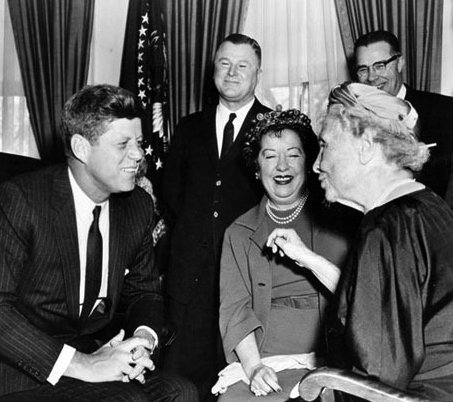
Helen Keller Social Activist


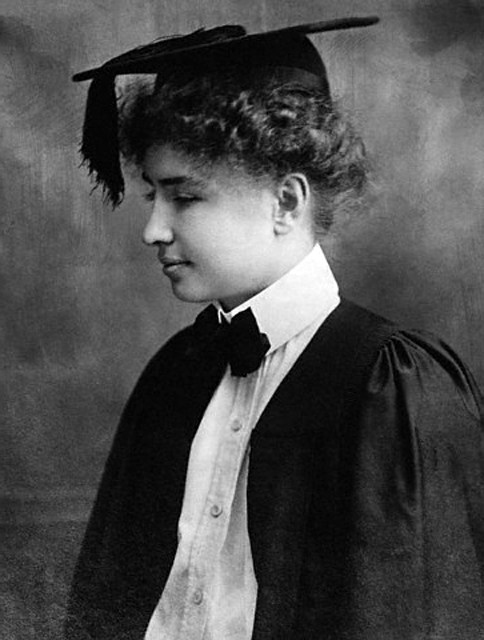
Helen Keller was born on June 22, 1880, in Tuscumbia, Alabama with both sight and hearing. At 19 months, she contracted a disease that although short lived, left her deaf and blind. The story of her astonishing achievements against what seemed impossible odds inspired movies, newspaper and magazine articles, and books. Many focused on the years with her teacher, Anne Sullivan, which is why she is often remembered as an author and lecturer who worked tirelessly for the blind and deaf around the world. It may also be why she is less known for her active role in labor movements, woman suffrage, socialism, and pacifism.

Her passionate and sometimes vocal involvement annoyed people who believed a person with disabilities (and women) should remain silent. Southern relatives disapproved of her support of the NAACP and her involvement in the establishment of the ACLU. The Nazis burned her books, and her writings and activities interested the United States government enough to earn her a file with the FBI. As she became more vocal, her fame came under attack. Some even claimed her political leanings were because of her disabilities. I suppose that could hold a grain of truth. It was because of her disabilities that she began working for others like her, and became aware of the disproportionate numbers of disabled in lower income brackets.  

It was not criticism of her beliefs that prompted her to soften her Socialist rhetoric, but rather an overwhelming desire to further the work of the American Foundation for the Blind (AFB). She was afraid her own political views would take away support from the organization. That did not stop her from working for her causes. She continued less visibly, but with equal passion.

The aim of all government should be to secure to the workers as large a share as possible of the fruits of their toil. For is it not labor that creates all things? 1924 letter to Senator Robert M. La Follette from Helen Keller.

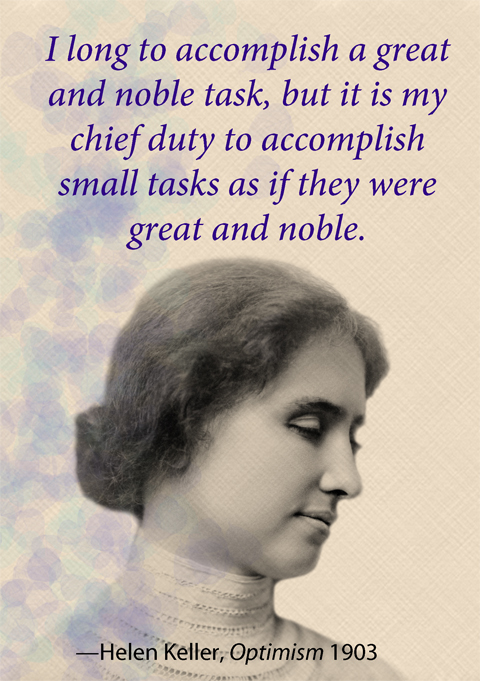
When Helen graduated from Radcliffe in 1904, she had already published her autobiography The Story of My Life, 1902, and Optimism an Essay, 1903. 

"The highest result of education is tolerance. Long ago men fought and died for their faith; but it took ages to teach them the other kind of courage—the courage to recognize the faiths of their brethren and their rights of conscience. Tolerance is the first principle of community; it is the spirit which conserves the best that all men think. No loss by flood and lightning, no destruction of cities and temples by the hostile forces of nature, has deprived man of so many noble lives and impulses as those which his intolerance has destroyed." Helen Keller, Optimism An Essay

On Woman Suffrage

From the essay, Why Men Need Woman Suffrage, 1913
"Anyone that reads intelligently knows that some of our old ideas are up a tree, and that traditions are scurrying away before the advance of their everlasting enemy, the questioning mind of a new age. It is time to take a good look at human affairs in the light of new conditions and new ideas, and the tradition that man is the natural master of the destiny of the race is one of the first to suffer investigation.

The dullest can see that a good many things are wrong with the world. It is old-fashioned, running into ruts. We lack intelligent direction and control. We are not getting the most out of our opportunities and advantages. We must make over the scheme of life, and new tools are needed for the work. Perhaps one of the chief reasons for the present chaotic condition of things is that the world has been trying to get along with only half of itself." See the entire essay,

On Workers Rights
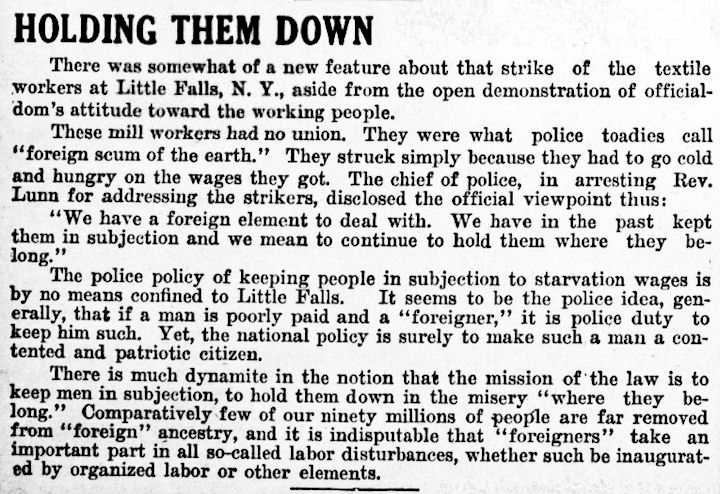
A letter and donation to the striking Little Falls, NY textile workers

The Tacoma Times, November 13, 1912
"I am sending the check which Mr. Davis paid me for the Christmas sentiments I sent him. Will you give it to the brave girls who are striving so courageously to bring about the emancipation of the workers at Little Falls? They have my warmest sympathy. Their cause is my cause. If they are denied a living wage, I also am denied. While they are industrial slaves, I cannot be free. My hunger is not satisfied while they are unfed. I cannot enjoy the good things of life which come to me, if they are hindered and neglected, I want all the workers of the world to have sufficient money to provide the elements of a normal standard of living—a decent home, healthful surroundings, opportunity for education and recreation. I want them all to have the same blessings that I have. I, deaf and blind, have been helped to overcome many obstacles. I want them to be helped as generously in a struggle which resembles my own in many ways."

 
On Society
From an article in the Socialist newsletter Justice. October 1913
"The structure of a society built upon such wrong basic principles is bound to retard the development of all men, even the most successful ones because it tends to divert man's energies into useless channels and to degrade his character. The result is a false standard of values. Trade and material prosperity are held to be the main objects of pursuit and conquest, the lowest instincts in human nature—love of gain, cunning and selfishness—are fostered."


I am only one, but still I am one. I cannot do everything, but still I can do something; and because I cannot do everything, I will not refuse to do something that I can do. Helen Keller
In 1932, Helen Keller had the opportunity to visit the top of the Empire State building, after which she received a letter from Dr. John Finley, inquiring about her experience.
Frankly, I was so entranced "seeing" that I did not think about the sight. If there was a subconscious thought of it, it was in the nature of gratitude to God for having given the blind seeing minds. As I now recall the view I had from the Empire Tower, I am convinced that, until we have looked into darkness, we cannot know what a divine thing vision is.
Perhaps I beheld a brighter prospect than my companions with two good eyes. Anyway, a blind friend gave me the best description I had of the Empire Building until I saw it myself.
...
But what of the Empire Building? It was a thrilling experience to be whizzed in a "lift" a quarter of a mile heavenward, and to see New York spread out like a marvellous tapestry beneath us.

There was the Hudson – more like the flash of a sword-blade than a noble river. The little island of Manhattan, set like a jewel in its nest of rainbow waters, stared up into my face, and the solar system circled about my head! Why, I thought, the sun and the stars are suburbs of New York, and I never knew it! I had a sort of wild desire to invest in a bit of real estate on one of the planets. All sense of depression and hard times vanished, I felt like being frivolous with the stars. But that was only for a moment. I am too static to feel quite natural in a Star View cottage on the Milky Way, which must be something of a merry-go-round even on quiet days.
See the entire letter.
Her vision is even more astonishing when you remember it came without sight and hearing. She taught that we are all one. That each of us has something to offer. How many of us "see" with that clarity?

No pessimist ever discovered the secrets of the stars, or sailed to an uncharted land, or opened a new heaven to the human spirit. Helen Keller Optimism an Essay

Yes Virginia, There is a War on Women (and others)


As you probably know, the Republican platform reads like a campaign from the 1950s. They no longer even pretend to like or respect women or minorities, and cater to extremists. I have known many Republicans over the years. Sometimes we disagreed, sometimes we agreed, and discussions usually led to a better understanding of our differing views. Discussion and compromise are no longer on the table. This fictional TV Newsroom offers a reason.


Lies and hate language pervaded the convention. For over three years we have watched continuous blatant disrespect for the president. Their most grievous offense? In standing by a vow to "deny Obama a second term" they disregarded the welfare of the citizens they swore to serve. The "Grand Old Party" is gone. What stands in its place is not representative of most of this country. It is not even representative of most Republicans. It is a sad, hateful, and rather spoiled group of wealthy individuals who have used religion, fear, and lack, to promote their agenda—their agenda of course is money and power. Who will be impacted most by a Romney/Ryan government? You guessed it, women.

"Why extremists focus on women is a mystery to me." 
Secretary of State Hillary Clinton


Then there is that pesky pay discrepancy thing that keeps popping up. The fact that women make 77 cents on the dollar is not argued against, not by many anyway. What is argued is that the difference is because of the choices women make, not because there is discrimination.


For the same work, dudes get paid more.
Rachael Maddow


Although the loudest voices have been filled with hate, bigotry, lies, and greed, I have undying optimism in human kind. While there are those who will do or say anything to support their own agenda, there are individuals around the country working for change.


We must not just hold our finger to the wind, we must become the wind. Gloria Steinem


Women, not just in the United States, but around the world, are ushering in change. Our ability to think and choose, and our place in society are under attack. It is time to remind ourselves and the oppressors of our power, number, and tenacity. Waiting to see what happens is not an option. Stay informed, share what you learn with others, and vote! Get involved in local elections, community gatherings, and voter registration. Raise your voice and spread the word. We will not go back. 


A Documentary celebrating Women around the World


 Eve Ensler Reads "Over It" Essay on Democracy Now!


Read Eve's response to Todd Akin: Dear Mr. Akin, I Want You to Imagine...


Inspired by Aung San Suu Kyi’s call to action, “If you’re feeling helpless, help someone,” Morley sings her song "Women of Hope" at TEDxWomen.
 
If the video won't play, please follow the link to see it on Ted.com
"Women of hope, Women of change, Women of war and pain, I believe the almighty knows each and every one of you by your name. ...If you're feeling helpless, help someone."

"I want to speak to the women" Gloria Cuartas


From the documentary film "Hope for Colombia". Colombian human rights activist Gloria Cuartas, speaks about the women in peace work. Watch the complete film about a 10 day Grace Pilgrimage through and around the Colombian capital Bogota in November 2010 free at http://www.hopeforcolombia-film.com


No pessimist ever discovered the secret of the stars, or sailed to an uncharted land, or opened a new doorway for the human spirit.
Helen Keller

Matilda Josyln Gage


Cotton Gin
The sudden death of her husband, General Nathanial Greene in 1786, left Catherine Littlefield Greene to raise five children and run a struggling plantation. She hired and manager and succeeded in both. In 1792 she rented a room to a young teacher named Eli Whitney, but was less interested in his scholarly work than his mechanical skills. She explained the difficulties of separating the course hulls of green-seed cotton and suggested an idea for a cotton gin. How much involvement she had in the design and construction isn't clear, although there is evidence that Whitney's original design had wooden teeth that didn't work and it was Catherine Green who recommended wire as was used in the successful model. Whitney patented the product and was credited with the invention. He paid Green royalties on the patent.

In 1798, twelve year old Betsey Metcalf of Providence, Rhode Island couldn't afford the hat she saw in a shop window and invented a method of braiding straw from her family's barn to make one of her own. Like Catherine Greene, Betsey Metcalf, afraid of social criticism, did not patent her idea. Mary Kies, of Killingly, Connecticut cared little about what the neighbors had to say and applied for and received the patent. Because of these women and a ban on imports, the straw hat industry grew rapidly in New England.

Anna Ella Carroll
Are you familiar with the Tennessee River Campaign of 1862? An investigation into the Civil War would tell you it was considered by many as the Union army's first major success. Further research would credit Ulysses S. Grant with the campaign's triumph but might not reveal that the plan changing the course of the war came from Anna Ella Carroll of Maryland. Assistant Secretary of War Thomas A. Scott and others at the War Department recognized the strategy was  written by a military genius—a genius known as A.E. Carroll. After the war, an attempt to enter Carroll's role in the official record was squelched for fear that it would outrage the general population to find the war had been directed not only by a civilian, but a female civilian. She received no compensation or credit for the action that saved the union.

During my research, I came across a YouTube video (actually an audio recording), of Agnes Moorehead performing in a Cavalcade of America radio episode about Anna Ella Carroll. It aired in June of 1941. It is interesting to realize that this story, omitted from history books, played on the radio. (If the video doesn't start, click on the YouTube button on the lower right and listen to it there. It's worth it. Just remember to come back.)


Matilda Joslyn Gage
But, this post is not about Catherine Green, Betsey Metcalf, or Anna Ella Carroll. So why all these interesting facts? I learned about Greene and Metcalf from a pamphlet called Woman as Inventor written by Matilda Josyln Gage and published by the New York Woman Suffrage Association in 1883. A piece called Who Planned the Tennessee Campaign of 1862: A few generally unknown facts in regard to our Civil War, also by Gage, revealed the remarkable story of Anna Ella Carroll.

You might be familiar with Matilda Gage for her role as co-editor with Elizabeth Cady Stanton and Susan B. Anthony of the first three volumes of The History of Woman Suffrage (1881-1887). Or, you might have read the book written five years before her death, Woman, Church and State. It is more likely that you know very little about Gage.

Matilda Electa Joslyn, an abolitionist, suffragist, author, lecturer, and radical thinker, was born in Cicero, New York in 1826. Her family home was a stop on the Underground Railroad. After her marriage in 1845 to Henry Hill Gage, their home also became a stop.

In 1848, with small children at home, Gage was unable to attend the first National Women's Rights Convention in Seneca Falls, New York. She made her public speaking debut in 1852 at the Syracuse convention. The movement, on hold during the Civil War, reconvened as the American Equal Rights Association, but with growing internal friction. Gage opposed supporting the ratification of the 15th Amendment unless it allowed votes for women. Others felt that securing the vote for all men would help women. The amendment, ratified in February of 1870, said: "The right of citizens of the United States to vote shall not be denied or abridged by the United States or by any State on account of race, color, or previous condition of servitude." In 1869, Gage, Anthony, and Stanton founded the National Woman Suffrage Association. Two years later, Gage and other members tried to vote, only to find that women were not considered citizens. In 1872, Susan B. Anthony successfully cast a vote and was arrested. Gage said: "Susan B. Anthony is not on trial; the United States is on trial."

In 1878, Gage bought a journal called The Ballot Box, which she renamed The National Citizen & Ballot Box and became editor and publisher. Stanton and Anthony were co-editors and the paper became the voice of the NWSA. This is a remarkable publication in any era, but especially in the late 1870s. Here are a few details from the prospectus:
The National Citizen will advocate the principle that Suffrage is the Citizen's right and should be protected by National Law, and that while States may regulate the suffrage, they should have no power to abolish it. 
It will support no political party until one arises which is biased upon the exact and permanent political equality of man and woman.

The National Citizen will have an eye upon struggling women abroad, and endeavor to keep its readers informed of the progress of women in foreign countries.

As nothing is quite as good as it may yet be made, the National Citizen will, in as far as possible, revolutionize the country, striving to make it live up to its own fundamental principles and become in reality what it is but in name—a genuine Republic.

Gage's radical views became unpopular with the increasingly conservative movement. In 1890, she left the organization to found the Women’s National Liberal Union, fighting religious fundamentalists working to amend the Constitution and proclaim the United States a Christian nation. In 1893, she published Woman, Church and State and made clear her belief that the church was the greatest oppressor of women. I believe those views contributed to her near complete omission from historical records.

But Matilda Joslyn Gage is not forgotten. Not completely. A growing amount of information is available, much because of another remarkable women, Dr. Sally Roesch Wagner.
The Matilda Joslyn Gage Foundation took root in 2000 when Sally Roesch Wagner, the leading authority on Gage, brought together a nationwide network of diverse people with a common goal: to bring this vitally important suffragist back to her rightful place in history. From the website of the Matilda Joslyn Gage Foundation
 Sally Roesch Wagner portrays Matilda Joslyn Gage at Bioneers in October of 2009. 
Problems with the video? Try this link: Sally Roesch Wagner's website.


It was Sally Roesch Wagner's book Sisters in Spirit that prompted this month's post. In it, Wagner tells the remarkable story of how Native American women influenced our nation's early feminist. As we face another critical moment in the struggle for equality, the work of previous women must not be forgotten. Their voices will remain silent only if we allow that to happen. 

 There is a word sweeter than Mother, Home or Heaven; that word is Liberty. Matilda Joslyn Gage