Thursday, September 1, 2011

Rosalie Sorrels

Beloved folk singer Rosalie Sorrels died on Sunday, June 11, 2017.  
Her legend will live on for generations.

Oh I have loved just like a child
On My Last Go Round
Rosalie Sorrels "Last Go Round"


Rosalie Sorrels
I turned the television on a few nights ago and before the picture came in, heard an unmistakable voice—Rosalie Sorrels. To my delight, I had tuned in at the beginning of an hour-long PBS show 'Rosalie Sorrels: Way Out in Idaho', featuring one of the most unique and memorable performers I have ever experienced.

Known predominately as a singer and songwriter, Rosalie Sorrels is also a respected folklorist. She was born in Idaho to a family of readers and musicians, and began collecting traditional folk songs as a child. At 78, her passion for gathering and sharing the history that these songs preserve continues. She hadn't planned to be a folk singer, but when her marriage ended in the mid 60s, Sorrels loaded her five kids in the car and took off. It was the beginning of what would be a lifetime on the road for the 'Travelin' Lady'.

I have had the good fortune of attending two live performances by the artist. The first, thirty years ago in Fort Collins, Colorado, and again four years ago in Albuquerque, New Mexico. You don't go 'to see' Rosalie Sorrels. From the moment she speaks, you are drawn into the world of stories and songs she shares. She is a great entertainer, but above all, she is authentic. In an era of high tech hype and slick performances, her pure and simple music and storytelling make her a powerful communicator. At both shows I was struck by that power. At the second show, I was also struck by the fact that in the twenty-five years since I'd last shared that experience, she had survived a brain aneurism and breast cancer.

Rosalie prefers small stages, intimate arenas. She likes to see her audience and communicate with them. I had a sense that she was as glad to be there as we were—that singing to us was important to her. I felt liked and special. You can't ask much more from a performer.

It is no exaggeration to say her voice is distinctive. There is a video on YouTube that mistakenly identifies a singer with Jerry Garcia at Woodstock as Mimi Farina. I laughed at the number of people commenting who identified Rosalie solely by her voice. That voice has been described as "an instrument as mellow and finely aged as an antique viola." The Boston Globe called her “one of America’s genuine folk treasures.” Gamble Rodgers called her the "hillbilly Edith Piaf". Studs Terkel said "Rosalie Sorrels sings songs the way you've always hoped they'd be sung: Deeply felt, effortlessly, and altogether loverly." Bruce Utah Phillips admired her ability to "get into the guts of a song." The Chicago Reader wrote, "Sorrels has decried the music industry's attempt to homogenize women and ethnicity into something blander. She's living proof that there are some things the biz just can't whitewash." Deeply moved by her performance, the late John Wasserman, entertainment critic at the San Francisco Chronicle commented "She did something that only the best can ever do; she brought back memories that we never had. She's one of the genuines, Rosalie Sorrels is." Others have described her vocals as 'well weathered and wise; real substance; true and powerful; a grain of crusty toughness; a voice that "cuts like a knife and purrs like a kitten".  

No, she isn't a household name, and I'd be curious to see how she would do at an audition for one of today's 'star' shows, but those who know folk music know Rosalie Sorrels. In 1990 she received The World Folk Music Association's Kate Wolf Award. With the new millennium came an honorary Doctorate of Fine Arts from the University of Idaho, and in 2001, The Boise Peace Quilt Project presented her with a peace quilt. In 2005, her album 'My Last Go Round' received a Grammy nomination for Best Traditional Folk Album, and in 2008, although officially retired, she recorded 'Strangers in Another Country', her tribute to lifelong friend Bruce Utah Phillips. It received another Grammy nod. In 1990 she published the 250 page book 'Way out in Idaho: celebration of songs and stories'. The contents came from hundreds of people who Sorrels met as she traveled across the state. She did what she does best, watched, listened and collected their stories, songs, poems, recipes, interviews, and photographs. It includes sheet music for 85 songs, and lyrics for many others. 

Today, she lives in a log cabin her father built near Boise Idaho. She still performs, and still collects songs, and yes, still enriches the lives of those who have a chance to see or hear her. 


As I write, I'm listening to her sing Malvina Reynolds' song 'Magic Penny'.
It's just like a magic penny,
Hold it tight and you won't have any.
Lend it, spend it, and you'll have so many
They'll roll all over the floor.

For love is something if you give it away,
Give it away, give it away.
Love is something if you give it away,
You end up having more.

When the credits rolled at the end of 'Rosalie Sorrels: Way Out in Idaho' I noticed that it was produced by Idaho Public Television and funded in part by the Idaho Humanities Council. I shivered thinking of recent efforts by politicians to cut into or completely eliminate these kinds of programs. Rosalie Sorrels is a hero, a patriot, a woman who tells and preserves the history of this nation, of its PEOPLE. It is frightening to think that her legacy might not survive.

"If you treat your children like they are the most interesting people you know, they probably will be." Rosalie Sorrels

Jean Sheldon

Friday, July 1, 2011

Judy Stone

Meet Dr. Judy Stone, a friend for over thirty years. After I asked her to join the 'Wise Women' ranks and received her musings, I realized there was more than a blog in her story. We discussed it and decided to publish her memoir. So here is a brief introduction to my dear friend, and a bit of a teaser for her book, 'A Stone's Throw' which will be out in the near future.


My life began in 1939 at St. Vincent's Orphanage in Chicago where my parents, Lee and Dorothy had, two years earlier, adopted my brother, Terry. I grew up in a loving supportive home, a two flat on Chicago's west side around Cicero and North Avenue. My mom died when I was 11, leaving dad as a single parent. His sister, my Aunt Mary, became an ever presence in my life. She had worked her way through a teacher's college, not a common accomplishment for women at the time, and then survived the depression. She was determined to help me achieve more. We met for dinner one night and she showed up with a handful of college brochures and the suggestion that I would do better at a smaller school. I had never considered college a reality, but what a wonderful reality it was. I graduated from MacMurray College in Jacksonville, Illinois in 1961.

I flourished there, learned how to play hockey, became student body president, and amazingly the May Queen (you have to know me to truly enjoy that). We had wonderful visits from the likes of Graham Green, and William Warfield, who talked the administration into having his wife, opera singer Leontyne Price sing for us. Seeing, and more importantly, hearing her was incredible. It was the late 50s and we had only two African American students. She had such a presence and regal bearing. None of us had heard much if anything about her, but there was a sense even before she sang, to start applauding because she was going to knock our socks off. She did! I did not even leave my seat during intermission.

After graduation, I spent a year teaching in New York—no teacher training in my background because I was a liberal arts/psychology major, but I had no clue as to what I wanted to do. Then on to California where I spent a year in Palo Alto using the skills that high school had provided—great typing and stenography—while in my position as personnel assistant, okay, secretary.

In 1963 I was accepted into the Peace Corps. When I received a telegram from Sargent Shriver asking me to be a volunteer in North Borneo/Sarawak, I had no idea where I was headed. Thankfully the head honcho at Eastman Kodak where I worked was a National Geographic reader and clued me in.

As one of the earliest groups to go overseas we were known as "Kennedy's Kids". We were in training on the island of Hawaii when we heard the news of the president's assassination. I remember that it was our last day of teacher training and we were all given tons of leis. When we got back to our training site there was a virtual mountain of them, discarded as we came in the door because there was no cause for the celebratory nature of the gifts.

My first assignment was to the island of Labuan off the coast of the newly named Sabah. We lived in government housing provided to all teachers and my duties were in a boy's school run by Dutch priests who also ran an orphanage. Teachers were Chinese, Malays, Indians (from India), Australian, British and now one American. The next year, I was transferred to the village of Melalap. Suddenly I was in a very remote place, the first Peace Corp volunteer to be there. On Labuan we had electricity, indoor plumbing, an indoor shower (cold water only), and a kerosene stove that had three burners. Melalap had none of those. For the first few months I did not have a kerosene stove or lights and when the sun set—so did I—often with two mosquito coils on either side of my head on the pillow.

It was quite a year, replete with a few king cobras visiting (and one queen) and an eclipse. This is of note because without warning of such one is not prepared. We were all surprised by the sudden and massive drop in temperature and students looking out the door said "Look teacher there's a star" I assumed they were just confused and using the wrong word. Duh—when I realized what was happening we looked at it properly, after probably ruining our eyes a bit. That afternoon no one came to school, but the word had spread that "Teacher said it was okay and she was going to explain it the next day and not to be afraid." I had to find out the Malay word for planet earth as the story could not be understood in English.

Leaving there filled me with great sadness. It had been such a wonderful year. My students loved me as I loved them and I had made many friends including the native chief and his wife who lived the closest to me. I had a chance to return there some years later.

I returned to the United States and worked with Job Corps in DC—a program to train and educate high school drop-outs. Terrific when it works but it was time for me to get on with my education. George Washington University turned me down by saying they were not accepting women that year and American University, also in DC, would not help with tuition as all assistantships were being given to men. I received my master's at Bowling Green in Ohio.

I left academia once again for Asia where I was director of the first total in-country training program in Thailand and was then recruited for Nepal. After receiving training there I trekked into the Himalayas with three other Thai volunteers, one Sherpa, and a young man who had escaped from Tibet. There were many incredible sites on this trip, but one more memorable was my first sighting of Everest reflecting the morning sun. The trip was the most arduous I have ever taken but the most rewarding. I had lots of time to myself. We did not talk much during the days as going up was to breath-taking (in many ways) and going down was too painful. In fact we looked forward to the days when we were going up.

I became a world traveler for one year spending months in Asia, then Africa, and finally Europe, eventually ending up back in Chicago to finish my Ph.D. at Loyola. Life had other plans, and prior to completion I was involved in a near death accident. So near that I came to once and a priest was giving me the last rites. I had enough presence of mind to say "Father I am not ready for that", glad that I was more right than he about my need for help into the hereafter. I stayed in the hospital for 130 days, but eventually claimed my doctorate.

You can see why I wanted to publish Judy's memoir. The more I read, the more questions I had, and the more I wanted to know. But her story doesn't stop with her years as a mental health consultant to Job Corps, as a volunteer and training and selection person for Peace Corps, her experiences as a eulogist, or her years as a clinical psychologist in Chicago. In fact, there is another amazing story in the last chapter, 'And Then There Were Ten'.

I mentioned I was adopted, and in the early 1990s, after years of searching I found the woman I was pretty sure was my mother. A man answered the phone that historic occasion and not knowing if he even knew of my existence I asked to speak to Rita. Upon mentioning my birth date and the belief that she was my mother she said "Oh my child, I have prayed for you every day of your life (about 50 of them at the time)". Well my heart was setting records when I heard her say to him "This is the little girl we gave up" As it turned out, George and Rita Busse married about three years after my birth and went on to have nine other children. And so in many rapid heartbeats I went from never knowing a blood relation to being the oldest of ten full brothers and sisters. It is rare for adoptees to have this kind of experience—most tend to find only their mother. When I went to see them, my father was waiting at the top of the stairs and said "I would have known you were one of ours from the moment you got out of the car—you look just like your sister Margie".

Watch here for more information on 'A Stone's Throw'.

Sunday, May 1, 2011

Willa Cather

All human history is a record of an emigration, an exodus from barbarism to civilization; from the very outset of this pilgrimage of humanity, superstition and investigation have been contending for mastery. Since investigation first led man forth on that great search for truth which has prompted all his progress, superstition, the stern Pharoah of his former bondage, has followed him, retarding every step of advancement.
Above is the opening paragraph of a speech Willa Cather made at her graduation from Red Cloud High School in June of 1890. She was sixteen and wrote it in response to those who criticized her interest in biology and science. You can see the entire text at Superstition VS. Investigation by Willa Cather.
Yes, I know, there are hundreds of websites filled with information about this great American writer, including, The Willa Cather Foundation and the University of Nebraska Willa Cather Archive, along with articles, blogs, and book reviews. This brief summary is only to acquaint those who haven’t read her work, and reacquaint those who have, to one of my favorite authors.
Willa Cather, born in Virginia in 1873, was most famous for her stories of immigrants who pioneered the American Midwest. Her family moved to Nebraska in 1882 when Willa was nine. A few years later, she took a job delivering mail on horseback to farms in the community, an experience that allowed her to become personally familiar with the diverse cultures settled there. When the Cather family moved from their unsuccessful farm into the town of Red Cloud, she met neighbors whose influence on her life was more intellectual and artistic, but equally profound. Many of them, along with those to whom she delivered mail, would become models for her future characters. She wrote, I don't gather the material for my stories....All my stories have been written with material that was gathered—no, God save us! Not gathered but absorbed—before I was fifteen years old.
Following high school, Willa enrolled at the University of Nebraska’s preparatory school to study science. It was only after one of her professors submitted a paper she wrote for publication that she considered a career in journalism. In 1893 she became managing editor of the Hesperian, the college literary digest and began writing columns for the Nebraska State Journal.
During her years at the university, Cather did what many college students do—searched for her identity. She experimented with her writing and her looks. For the latter, she cut her hair short, wore men's clothing, and signed her name William Cather. These actions, hardly revolutionary today, were outrageous for a woman of the late nineteenth century, but so was a woman wanting to write. Her early writing, along with the literary criticism and essays, included a book of poetry, April Twilights, and a collection of short stories called The Troll Garden published in 1905. In 1906, she moved to New York and joined Edith Lewis, who would be her companion for the rest of her life. She also became an editor at McClure's magazine where she stayed until 1912 when she began writing full time. It was that year that her first novel, Alexander's Bridge, (originally Alexander's Masquerade) appeared in McClure's. During a trip to the southwest, Cather was struck by sudden inspiration and began writing the pioneer novels that would bring her greatest fame, O Pioneers! (1913), The Song of the Lark, (1915), and My Antonia (1918).
Here is the chronology of books that followed.
Youth and the Bright Medusa a collection of short-stories 1920
One of Ours published in 1922 won a Pulitzer Prize the following year.
A Lost Lady 1923
The Professor’s House 1925
My Mortal Enemy 1926
Death Comes for the Archbishop 1927
Shadows on the Rock 1931
Obscure Destinies, a collection of short stories 1932
Lucy Gayheart 1935
Not Under Forty, a book of essays 1936
Sapphira and the Slave Girl 1940
The Old Beauty and Others, a collection of short stories 1948 published by Knopf a year after her death.

There is a sparseness to Cather's books. Not something forgotten, but the intentional clearing away of debris to allow the story full reign. In an article written for The New Republic called The Novel DĂ©meublĂ© she wrote: How wonderful it would be if we could throw all the furniture out of the window; and along with it, all the meaningless reiterations concerning physical sensations, all the tiresome old patterns, and leave the room as bare as the stage of a Greek theatre, or as that house into which the glory of Pentecost descended; leave the scene bare for the play of emotions, great and little—for the nursery tale, no less than the tragedy, is killed by tasteless amplitude.
If you have read her stories, you know how effectively 'unfurnished' they are. Cather once said that after seeing a mural by Pierre Puvis de Chavannes she wanted to create the same effect with a story.  “…something in the style of legend…with none of the artificial elements of composition…the mood is the thing."
It is 'the mood' I find most attractive in her writing. A line in the epilogue of her first novel, Alexander's Bridge, answered an age old question for me. Are we the person we perceive ourselves to be, or the one that others see? Wilson shook himself and readjusted his glasses. "Oh, fair enough. More than fair. Of course, I always felt that my image of him was just a little different from hers. No relation is so complete that it can hold absolutely all of a person."
In My Antonia, the narrator pens a manuscript called 'Antonia', to which he hastily adds 'My' as he passes it on to a friend. In his text he recounts his childhood journey to Nebraska and parts of his life shared with Antonia. The story, the struggle of immigrant farmers in harsh, unforgiving land and times, is a classic work. H.L. Mencken wrote, No romantic novel ever written in America, by man or woman, is one half so beautiful as My Antonia.
It is difficult to pick a favorite, but if I had too, I might choose The Song of the Lark, which is the story of a young woman's struggle to become an opera singer, and Death Comes to the Archbishop, which I read again after having lived in New Mexico for a few years. She completely captured the 'sense' of the area. For someone new to Willa Cather, I would say My Antonia is a good place to start, but do start.

Willa Cather died of a cerebral hemorrhage on April 24, 1947, at their home in New York and was buried in New Hampshire. At the bottom of her large gravestone is a quote from My Antonia: "that is happiness; to be dissolved into something complete and great."

Friday, April 1, 2011

Eleanor Louise Sheldon


This month features one of my favorite 'Wise Women', Eleanor Sheldon, Mom. When I announced my plan to highlight her in April for her 82nd birthday, she wasn't sold on the idea. She felt that since the other guests were writers, she didn't belong. It's a good thing this is my blog. Happy Birthday, Mom!

On April 29, 1929, Eleanor Louise Owen first shook the bright curls that would earn her the nickname 'Red'. She was born in the boarding house her mom and dad owned on Marshfield and Harrison in Chicago. If you go there today, you'll find Rush Library and Medical College. My grandparents lost the building a short time after mom's birth when the stock market crashed and tenants could no longer pay their rent. They didn't have the heart to evict anyone.

What I remember most is laughter. Mom has a knack for not taking herself or life in general too serious. When I was in high school, the coach for our volleyball team had to drop out and we needed an adult to replace her in a hurry. Mom knew nothing about volleyball and her idea of exercise was raising four kids and dancing, but she volunteered. We were the worst team in the conference and had a very short season, but no team had more fun. After missing a relatively easy shot, I looked over to the sidelines ready to be chastised. Instead, I saw 'the coach' trying to hide her laughter and urging us on. What a great lesson for a fifteen-year-old—winning IS NOT everything—the joy is in playing.

As in all families, there were times without laughter. One of those was in May of 1968 when my brother Bill died in Viet Nam. Even now I cannot fathom the pain my parents felt losing their nineteen-year-old son. "You are not," Mom said through her tears, "supposed to live longer than your children."

Mom was a typical teenager in Chicago during the challenging years of World War II. Too young to work in the factories, she took a job as a waitress at the local drug store and spent her evenings doing what she loved, dancing at the USO. She and her best friend had another passion. For over 60 years, Chicago was home to one of the nations then largest amusement parks, Riverview. She and Charlotte would walk the 12 miles to and from the park to spend their day off ignoring the frightening news of the war, eating cotton candy and foot long hot dogs, riding "The Bobs", a roller coaster with an 85-foot drop, and checking out the servicemen there on leave.

It wasn't until after the war when her family made a brief move to Wilkes Barre, Pennsylvania that she met the serviceman of her dreams. On her way to her aunt's where she was staying, she spotted William Sheldon on his front porch. He had just returned from the Navy. She knew at that moment he was the man she would marry and when her family returned to Chicago, 'Billy' followed. They were married in 1947.

Because of her family's move, Mom dropped out of school. Years later she returned to high school and graduated as valedictorian of her night school class. It was a proud moment for all of us when she gave her speech on the stage where my brothers and I graduated.

Dad worked as a computer programmer, so mom was no stranger to the 'new' technology. She took an entry level position as a key punch operator and moved up the ranks. Before long, she was writing procedure manuals for developing positions in the computer industry. An industry, which she often reminded us, paid women half the salary for the same job as men. Any wonder that I'm a feminist!

While writing this article, I looked through photos and memories and tried to see Eleanor Sheldon not as my mother, but as others saw her. A red-haired beauty who raised four children, worked full time both outside and inside her home, and now, an eighty-two year old woman, mother, wife, grandmother, friend, and perhaps many other sides I will never know.

As I looked back over the years, I remembered when my brother Bill at around age ten came home with blood pouring from a gash in his head. Mom stayed focused and handled both the crisis and her slightly hysterical daughter. I remembered when our faithful dog, Hoppy, had a seizure in the yard and mom knelt at his side, cooling him with water, talking to him, and soothing him until he recovered. I remembered her cooking, cleaning, keeping the books, washing and hanging laundry, dancing, singing, drawing, going to work, and oh yes, I remembered her laughter. The memories of those and other incidents make it impossible for me to guess how others might see her. That's okay. I see her as I always have—remarkable.

The other day, after I had written much of this article, my parents dropped by to help me hang drapes. It was comical as the three of us worked through our collective 'senior moments' and managed to get the rods and drapery hung fairly straight with few injuries. Mom kept track of where Dad and I left the tools, rulers, hardware, etc; she crawled on the floor to talk to my cat under the bed, less than pleased with the disturbances; and she quickly solved a problem Dad and I made far more complicated than it was, saving us additional work and frustration. Mom can do that. Mom can do an amazing number of things. A few years ago, after I had written my first mysteries, Mom, an avid reader, decided she'd like to try her hand at writing. She's working on her second story. You see, Mom, you do belong here.

 The human race has one really effective weapon, and that is laughter. Mark Twain

Tuesday, March 1, 2011

Carol Grier

In 2010, when the Northwest Association of Book Publishers was planning it's presence at Wordstock, a popular Portland, Oregon book fair, we asked members to volunteer a few hours to work at our booth. One of the first hands in the air was that of Carol Grier, an octogenarian who is no stranger to answering the call for help. I'm delighted to be an associate and friend to a woman best described as a Class Act!

Carol was born in 1924, in a farmhouse near Orofino, Idaho where she lived briefly with her mom, Elizabeth, and her birth father. In an era when society quietly expected a woman to tolerate beatings from her husband, Elizabeth rebelled. The marriage ended in divorce, forcing the young mother and daughter to return to her impoverished parents' home. After the move, Elizabeth discovered she was pregnant, and tragically, one of Carol's earliest memories is the death and funeral of her baby brother. Another, less heartbreaking recollection, was of her mother's return from nearby Moscow, Idaho where she had gone to work. She brought with her a new husband, a father for Carol.

By 1931, the nation struggled in the grips of an economic depression. Carol was seven when her new father, lucky enough to find a job, moved the family to Yosemite National Park. The experiences of the next six years would stay with her for the rest of her life. From Choices, a Memoir: The bittersweet echo of Yosemite is still with me. Paradise is supposed to be our last adventure not our first. It was painful to leave but I'm happy for those halcyon days. The purity of the air, the majesty of the mountains, and the quiet privacy taught me the value of the earth on which I lived. As I absorbed the wonder around me, I developed an inner strength, for Yosemite had crept into my soul, never to leave.

Although magical, the years in Yosemite were not perfect. After one of her father's friends touched her inappropriately, she ran home and told her mother, only to find doubt and disbelief. Carol knew that if her mother wouldn't believe it about a stranger, she would never believe that her father was doing the same thing. She decided to deal with it herself. The next time he slipped his hand under her blanket, she told him to stop. He did.

From Yosemite, the family moved to San Francisco for a short time before finally settling in Portland, Oregon. This brief summary is just the beginning of Carol's story, told in her second book, Choices, a Memoir. In chronicling her own family's history, Carol artfully reveals the struggle of women and families in the twentieth century. Her writing and storytelling moved and entertained me, but it also reminded of the importance of memoirs to both literature and society. What better way to examine our past and prepare for our future than the well penned experiences of those with whom we share this journey.

Why did you write Choices?
I had several reasons. Overall I wanted to emphasize how important our choices are. Good or bad, we live with them for the rest of our lives, but it is possible to have a good life in spite of tragedy and grief. I also wanted to demonstrate how much we women have gained from the early 1900s to the present. It is my hope that our youngest generation of women will value it. And for my own benefit, I wanted to determine if it was possible to escape the negative patterns that are set for us by preceding generations. By the time I finished the book, I realized that my mother had escaped at least part of the pattern, which enabled me to escape even more. Writing the book was a great experience because it rounded out my memories.

Carol's first book, Secrets, a Memoir opens as she reads a letter from her estranged son telling her he has inoperable cancer and six months to live. It is never easy to read about tragedy. Even when it happens to people we don't know, it stirs our emotions and the memories of our own loss and pain. The story of Carol's relationship with her son in the last 8 months of his life stirred many of those emotions. It also stirred anger at the inhuman treatment inflicted on people with AIDS and their families and friends. The book, filled with descriptions of the remarkable courage of some, and the remarkable insensitivity of others, is a testament to the endurance of love. In the end, whatever barriers existed between mother and son, whatever hatred others dispensed, disappeared in that bond. Carol, thank you for sharing your story.

I still see Carol at NWABP meetings and can keep you posted on her up and coming books. She is currently writing How to Recognize a Good Man When You Meet Him…and How to Treat Him, to help women pick out good husbands.  She is also in the editing process of a novel, Pine Bluff, a multi-generational story of a family in Idaho. See Carol's interview on Author's Forum.

Thoughts from Carol
You want to be happy? First, sit down and make a list on one side of the page with a heading of Happy.  Add another column with a heading of Unhappy. It’s simple. All you have to do is fill in the columns with what makes you happy and what makes you unhappy, but you have to list 20 things under each heading. You should learn a great deal about yourself from these lists. For those of us who really don’t want to be happy, it will be a hard lesson, perhaps one they just can’t absorb. For those of us who have been ground down with responsibilities and tough breaks, it will give them a chance to breathe again. Try it. Find some joy.

Carol Grier’s Ten Commandments
1. Be faithful to yourself, your mate, and your children
2. Be honorable
3. Be ethical
4. Be compassionate
5. Treat others as you would have them treat you
6. Cultivate humor and laughter
7. Be generous with love
8. Be eager to learn
9. Be outgoing, not in-growing
10. Always have a goal

AMEN!

Monday, January 31, 2011

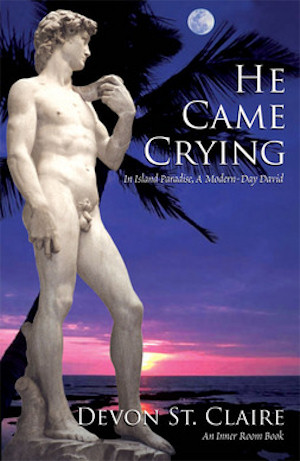
Devon St. Claire

Have you ever started a writing project and wondered if you would have enough to say about the topic? From the first word, I knew that would not be a problem in composing this article. In fact, I guessed correctly that I would have too much to say.

Dr. Veronica Esagui, who you met in the previous post, introduced me to Devon St. Claire, although I had the pleasure of reading her three books of fiction before meeting her in person. I'll talk more about her books shortly, but first I want to talk about the woman herself.

Prior to her career in fiction writing, started when she was 80, (that is not a typo) Devon was an educator, published editorialist, guest columnist, and a serialized radio scriptwriter/broadcaster. Her love of language began when she won a citywide essay contest at age eleven and that early success resulted in a master's degree in the humanities and a teaching career. While in academia, she began writing editorial comments to the Minneapolis Star, putting into practice writing tips she was currently teaching in class. Her students poured over the morning edition, thrilled when they found her byline and recognized the technique she used. She called it "the best teaching tool ever", and I'm guessing they are still thanking her for the skills they learned.

After her retirement from teaching and a sojourn in Hawaii, Devon began writing radio scripts for a philosophical series. She called them "inspirational narratives" in which she "tried to tell the very best story possible within the confines of the radio show, and let the listeners decide on the meaning for their individual life." The stories ran three times a day, sometimes in the wee hours, in Portland, Honolulu, and Christchurch, New Zealand. The script writing helped her hone her dialogue skills and "practice powered description which did not depend upon the crutch of adjectives, but on the verb energy." I'm sure there was a large share of 'Devon' energy as well. Throughout this project, her newspaper connection continued with essays in The Oregonian, The Columbian, and The San Francisco Examiner. However, it was in 2005, when she stood in the grotto on the island of Patmos thinking about St. John and Revelations that she considered writing a longer narrative drawing upon 80 years of experiences and observations of humanity in action. She went on to write Memoir of the House, He Came Crying, and Shadow Women, Emerging into Light.

Devon's Books
Memoir of the House
It challenges my gray matter to think of all the houses and apartments I've inhabited throughout my life, but the ones memorable enough to recall often made me wonder what stories they would tell if they could speak. In spite of my own questions, it surprised me to discover that the protagonist of Memoir of the House was a log home in the remote Colorado Rockies. After spending its early years filled with the love of a happy family, the main character tells of its tragic abandonment and subsequent sordid inhabitants. The spirit of the house, moving from naive innocence to the brink of its own 'dark night of the soul', propelled me through the story, introducing me to its residents while it struggled to understand them and their differences from the first family. I am not an avid science fiction or fantasy reader and even shudder a little when animals talk in stories, but the voice of the house from the pen of Devon St. Claire spoke to me with an eloquence and feeling I won't soon forget.


He Came Crying
The idea for He Came Crying, according to Devon, simmered in the back of her mind since she lived in Hawaii in the mid 70s. Articles in the Honolulu Advertiser exposed serious abuses of students brought from the Pacific Islands by the Mormon Church to work at the Polynesian Cultural Center while attending college. Those reports became the foundation for the journey of Dahn Rishi Singh, an Indian youth raised in Fiji and schooled in New Zealand who went on to do graduate studies in Hawaii. Dan, his western name, is a gentle soul who struggles to do right by himself, his family, and those who say they want to help him. Poetry and love allow him to find and understand his true beliefs. Of this character, Devon wrote, "With the Bible's David as a model, I could let Dan try and fail, but never lose the base in his thinking, the relationship with a God vastly different from the harsh, controlling 'god' of the Mormons." Once again, the character driven story captivated me, but in this story, instead of a house, it was a young man from India the author wanted readers to know and understand. By the time I finished He Came Crying, I knew him well.


Shadow Women, Emerging into Light
A group of intelligent and sensitive women caught in a variety of bad situations, find a guide in a teacher who shows them how to move toward freedom one step at a time. The stories and poems reflect their struggle for empowerment, and Escape, the final narrative shows their transformation as they journey toward a once unthinkable independence. It also introduces a group of men from the Canadian Rockies who through a series of 'mystical accidents' become first fans and then friends with the fictitious teacher and the author herself. Since the publication of her books, Devon has kindled a number of cyber connections with people who after reading her stories, found the strength and courage to change their own bad situations. What greater reward is there for a writer?

Devon's Thoughts
"I have to duck my head over such a title as 'a wise woman'. For a long time I have practiced being still and listening, and then acting if I had something worthy to contribute. Some persons might call it inspiration.

"In my novel-writing career of only five years, I cannot point to adversity. It has been, instead, a splendid ride. I had not imagined that these wonderful lovers of a good story would share their enthusiasm for the ideas woven in, buying copies for others, writing often to discuss crossroads in their lives, indicating how they have been empowered to be pro-active and change their lives. Several thought they recognized their own struggles in a chapter. To me that meant the 'facts' I used to achieve reality for my imagined story had been well chosen.

"No adversity here. There is only this feeling that it would have been a crime not to answer that small call to write a novel about the human condition. The rest has to be tasting of humility and deciding that for some beautiful reason I became a kind of conduit through which insights for troubled persons could flow. What an honor.

"It is mind-expanding, spirit warming, heart filling. I highly recommend probing the mind for ideas to share, devising themes to capture the reader's imagination, interacting with readers, and being crowned in the most unusual way in the second half of a full life. Never, did I ever consider how a story could be parable-like and be a great source of help for individuals.

"Rather than a wise woman who has risen above times of great testing to success, I am a blessed woman wanting nothing more than to keep contact with the readers who are on their way in life and to add new readers who find similar inspiration and feed my spirit."

This brief summary can scarcely express the power of St. Claire's writing, or the inspiration she has given to many, including myself. She is indeed what every writer should strive to be—an author in touch with her readers.

Sunday, January 2, 2011

Dr. Veronica Esagui

l
I first encountered Dr. Veronica Esagui at a meeting of the Northwest Association of Book Publishers. She was announcing a number of upcoming opportunities for authors and publishers in the Pacific Northwest, many of which she had organized. One in particular was a chance to appear on her television show 'The Authors Forum'. Before my brain remembered that I was a shy, rather reclusive person, I gave Veronica a card and asked if she would consider interviewing me about my historical fiction, 'The Woman in the Wing'. A few weeks later, I received an email to be on the show. YIKES! The interview was a wonderful adventure, but I'm not sure how it would have gone were it not for Veronica's talent at making a person feel completely comfortable. I have since learned that it is only one of her many gifts.

VerĂ³nica Leah Toledano Esaguy Wartenberg came to the United States in 1962 from Lisbon, Portugal for a prearranged marriage to her cousin. Her name, she explained, was shortened to a more Americanized version, Veronica Esagui, and to her chagrin, her husband insisted on calling her Ronnie. In her memoirs, a series of four books written in first person, she presents a refreshingly open account of her life. Two have been published so far, and the first, Veronica's Diary, the Journey of Innocence tells of her first eighteen years. It ends as she steps onto the shores of the United States.
In The Journey of Innocence we learn that Veronica grew up 'with a silver spoon in her mouth'. Her father owned a German delicatessen in Lisbon and her mother had been a concert pianist awarded a silver medal by the King of Spain. Unfortunately, their financial situation changed as did their lives. Veronica recalled watching the furniture leave the house a piece at a time to help them survive and learned painful lessons about prejudice. They were German Jews in a Catholic country after WWII. She also learned that she had no freedom in her personal choices. Her mother and aunt arranged her marriage.

The second book, Braving a New World, is more than a story about the struggles of a new wife and mother in a strange country. It is a glimpse into a creative, loving, understanding, sometimes frightened, but always gentle, human being, overcoming challenges that would have knocked many of us out of the game. I found her attitudes about life and its many challenges empowering and her thoughtful, honest storytelling style uplifting and often amusing.

But, she is not 'just' an author. Dr. Esagui is a woman of action with one part of her brain tirelessly seeking new ideas, and another part finding ways to bring those creations to fruition. Those ideas usually involve one or more of her passions as a writer (playwright, author, and journalist), musician (classical guitarist and teacher), director, (theater and television) to name a few. And, she accomplishes these feats in off hours from her work as a chiropractic physician at Gentle Care Chiropractic. That career came literally by accident when she was told she needed back surgery following a lifting injury. After learning first hand that she didn't need drugs or surgery to accomplish her personal miracle, she decided to go back to school and help others in the same way she had been helped. Her experiences treating young patients with scoliosis, led to the development of The Esagui Scoliosis Protocol (TESP), a very specific group of exercises which, along with chiropractic adjustments, proved to help reverse scoliosis. This experience led her to write and publish The Scoliosis Self-Help Resource Book.

That is an impressive list of accomplishments on its own, but what I find most remarkable about Veronica is her selfless approach to life. I have since attended a number of events with her, and watched her continual counsel and support of those involved—her success is based on the success of the entire group—a rare attitude these days.

I asked Veronica about writing:
To me writing is a free ticket to travel anywhere in the world, anywhere in the universe, and I’m willing to go as far as it will take me. Be it fiction or non-fiction we are obligated to share…we are the purveyors of the real past with the written word.

I asked about some of the more graphic descriptions in her memoirs. She does not recommend her books for children.
At my age, I’m not worried about that. I wanted to keep the stories exactly the way they happened. When you are over 50 you become fearless, not afraid of the truth. Memories are the essence of existence and the gift of yesterday’s choices.

It has been a privilege and an inspiration for me to meet and learn more about Veronica. I recently became president of the Northwest Association of Book Publishers, a challenge I'm not sure I would have taken on if it hadn't been for her support. I am thankful to be among the many whose lives she touched.

See Veronica on her own show interviewed by the shows producer, Karen Sorbel.