Wednesday, February 1, 2012

Madge Tennent

This month, please welcome friend and guest blogger, Madge Walls, sharing a story about her grandmother, artist, Madge Tennent. Thank you, Madge(s), for this delightful piece of history.

Madge Tennent
Shortly after I arrived at the University of Oregon in 1961 to begin my freshman year, I embarked on a challenge that would have been impossible in my hometown of Honolulu. I took a long slow walk diagonally across the campus, from corner to corner, looking everyone I passed in the eye and daring them to recognize me. Of course no one did, and that was the point. I wasn’t famous in Honolulu, but my grandmother was, and we shared the same name. Our family was well known, and I couldn’t go anywhere without being recognized as her granddaughter. In Oregon I was blessedly anonymous for the first time in my life.

Once when a mainland college friend was working for the summer at First Hawaiian Bank, she cashed a check for my grandfather. The check read “Madge or Hugh Tennent.” Aghast, she asked the white-haired old gentleman if he was married to Madge Tennent. “Of course,” he said. “Have been for 45 years.” When his response rendered her speechless, Granddad realized she must have known me and thought I was married to my grandfather. He thought it was funny. I didn’t.

Being much older now than my grandparents were at the time of the bank incident, I look back with gratitude at the example of my groundbreaking grandmother, who set out to create a unique artistic statement, never deviated from her goal, and succeeded monumentally.


Mention the name “Madge Tennent” to a resident of Hawaii, and you’ll conjure up in his mind a kaleidoscope of swirling colors that slowly take the shape of massive Hawaiian bodies at rest, at work, and at play. In the next instant, the vibrant colors dissolve, and he sees the delicate wisps of a line drawing, white ink on black, twelve rhythmic strokes that capture the essence of young Polynesian beauty. This image in turn bursts into the bold statement of a hefty matriarch delineated by freestyle sepia “featherbrush strokes,” a term coined to describe yet another Tennent trademark style.
Often referred to as Hawaii’s Gauguin, Madge Tennent (1889-1972) was unswerving in her devotion to the beauty of the Hawaiian people with pen, brush, and palette knife. She left behind an extensive body of work that explores and preserves this unique people in a riot of color and grace of line that only genius and love could have produced.

She was born in London and raised in Capetown, South Africa, by parents who recognized her artistic talent at an early age. When she was 13 and had exhausted the possibilities for artistic schooling in Capetown, these extraordinary parents (her father owned a construction business; her mother was the editor of a women’s fashion magazine) moved the family to Paris where she studied under William Beaugereau. On the days when she was not in his studio, she haunted the galleries and museums, sketchbook in hand, absorbing everything she could from the classical and impressionistic masters.


Studio study in Paris age 13-15
Two years later they returned to Capetown, where Madge taught art and illustrated fashion magazines until she met a dashing officer in the Natal Light Brigade, Hugh Tennent. They married and returned to his home, New Zealand, where she led the haphazard life of an army camp follower until their first son Arthur was born in 1916. Hugh went off to war in Europe and returned with a seriously wounded hand, making him a candidate for government service in another arena.

The young family was sent to Western Samoa, which had become a New Zealand protectorate after the war, with Hugh as the treasurer of the territory. Their second son, Val, my father, was born there in Apia

During their six idyllic years in Samoa, Madge found endless hours to perfect her sketching technique, as well as an enthusiastic supply of languorous models to sit for her. This was the beginning of her joyous exploration of the Polynesian form.

The Tennents arrived in Honolulu with their two young sons in 1923, planning on a three-day stop before continuing on to London to enroll the boys in a proper British boarding school. Almost immediately they were introduced to members of the local artistic community, who saw her Samoan studies and begged her to stay and paint the Hawaiians. She needed no further persuasion than a good look at the fabled scenery and a nod from her husband.

 As a chartered accountant (the British equivalent of a CPA), Hugh was unable to work until he put in a year of residency. Madge supported the family by doing watercolor portraits, mostly of society children. She kept a studio downtown on Hotel Street, which she only later discovered was in the red light district. Mothers apparently thought enough of her work to overlook the neighborhood when they brought their children for their sittings, and of course they only came during the daytime.

By the end of the year, she was so sick of painting to please others that she vowed never to put herself in that position again. Hugh was fond of saying that many times the cost of her paints came near to breaking them, but he supported her enthusiastically and she never backed down.

Madge was fascinated by the Hawaiians from the beginning, but true inspiration struck when she was given a book of colored reproductions by Paul Gauguin in Tahiti. From that time on she devoted herself to the single-minded pursuit of the splendor of this remarkable people.


Tennent’s importance in the history of world art is based, then, on more than her undeniable talent. She chose to concentrate on one subject and work full-time to investigate, explore, study, and examine every facet of the female Hawaiian physique.

She evolved a unique style that was often controversial in her lifetime and freely exaggerated to make her aesthetic point. One of her favorite stories was of a society dinner party that broke up over a heated discussion of her work, including whether or not it was a downright insult to the Hawaiian people. I choose to believe that she has single-handedly preserved their unique beauty for all time.

"Larger than life," "swirling masses of color," "rhythm in the round"—these are terms that only hint at the effect of her massive oil paintings. Yet she was equally as capable of distilling the essence of Hawaiian femininity in a few fluid pen strokes.

Tennent was the first artist to see in the Hawaiians a unique artistic statement. Previous artists in the Islands tended to portray them as Europeans with dark skin and hair, dressed in native costume to make their point. By remaining true to her vision, Tennent served as an inspiration to the many artists who today have made the Hawaiian face and figure a popular and understood subject. 


Over the years she was very active in the arts community in Honolulu, taught frequent classes at the Honolulu Academy of Arts, and wrote for publication on art-related subjects. Her Autobiography of An Unarrived Artist was published by Columbia University Press in 1949 and has become a collector’s item.

Major collections of her work are found at the Honolulu Academy of Arts, the University of Hawaii, and the Isaacs Art Center in Waimea. She is represented at the H. M. de Young Museum in San Francisco and the Victoria and Albert Museum in London. During her lifetime she exhibited tirelessly on the Mainland and in Europe.

A major oil entitled "Local Color" was prominently featured in the opening exhibit of the National Gallery for Women in the Arts in Washington, D. C., along with a collection of her portraits of Hawaiian royalty, in 1987. Tennent’s inclusion in this event received extensive national press coverage.


The greatest repository of her work, however, is in the homes of Hawaii’s old-time residents and their heirs, who received them as gifts from the artist or purchased them for a few dollars at her favorite charity events. Accepting but saddened by the fact that her work did not sell well during her lifetime, she was always tickled when she succeeded in giving it away for a worthy cause.
 

Just a few days before her death in 1972, Tennent summed up her philosophy of life and art for a newspaper reporter who interviewed her, frail and blind, at a private nursing home overlooking Diamond Head. He asked her, "How does it feel, Mrs. Tennent, to have your genius publicly recognized during your lifetime?"


"Genius, baloney," she muttered, with all the strength she could muster. "It was nothing but darn hard work."

Madge Tennent Walls was raised in Hawaii and raised her children on Maui, where she was a Realtor and real estate instructor for many years. She currently lives just south of Portland, Oregon, where she is a freelance indexer of nonfiction books http://allksyindexing.com and writes memoirs for folks who would like to preserve their life stories for the generations to come. http://memoirsbymadeline.com. She is also the author of an award-winning novel of Maui, Paying the Price. And no, she can’t and doesn’t paint.


Sunday, January 1, 2012

Women Pilots in World War II—WASP


 In 2006, while researching the 1940s for a mystery, I came across an article on the Women Airforce Service Pilots. I had never heard of the female pilots and was fascinated by their story. So much so that I dropped the current work in progress and began The Woman in the Wing, a novel involving women pilots and Rosie the Riveters in the Second World War. New to writing, but determined to promote their story, I decided to present it as a mystery, the genre I knew best. 

The story takes place in 1944 at the Douglas Aircraft factory outside of Chicago, one of the plants producing C-54 transport planes. Today the site is O’Hare Airport and although the Douglas plant was there, the WASP training camp depicted in the book was not. The only actual training base was Avenger Field in Sweetwater, Texas. The fictional adventure offers a glimpse into the lives of US women who served at home during World War II—and there were many. Two hundred thousand women enlisted in the military, and twelve million, many who had never worked outside their homes, took jobs in factories, shipyards, offices, and as civilian workers on military bases. They preformed jobs that no one, often including the women, expected they could do. Many took on familiar roles, such as sewing flags, uniforms, and parachutes, but others were mechanics, cryptographers, welders, and the most famous, Rosie the Riveter, who became a symbol for all women workers.

The WASP
In September 1942, Nancy Harkness Love, a 28-year-old pilot, convinced Air Transport Command to let her collect and train already licensed women to fly as civilian ferrying pilots, moving planes from factories to air bases around the country. These 27 recruits, the first women to fly US military planes, belonged to the Women's Auxiliary Ferrying Squadron, the WAFS. In 1943, Airforce General Hap Arnold merged this group with the Women’s Flying Training Detachment, WFTD, led by Jackie Cochran. They became the Women Airforce Service Pilots, a non-military organization that Congress maintained throughout its existence, was an experiment. The WASP program was not an experiment to the twenty-five thousand who women applied, or to the almost two thousand who qualified and trained. It certainly was not an experiment to the over 1,000 successful graduates who earned their wings and tested and ferried nearly 12,650 military aircraft, flew over 60 million miles, and completed other piloting jobs to free up men for active service.

After graduating and receiving their silver wings, the WASP lived and worked at one hundred and twenty bases around the country. They wore uniforms that followed strict military code and took orders as if they served in the armed forces. They did not. As civilians, they had no life or accident insurance, no death benefits and could not be buried in a military cemetery or receive a burial with flags and honors. They paid their own way to the base, and if discharged, their own way home. When the program ended, the women had to find and pay for their transportation home. WASP could achieve no rank of significance outside their organization, nor could they give orders to men. Federal law prohibited women from flying military planes into combat or outside the boundaries of the United States. They transported every make of airplane in the American armament, including training, pursuit, and transport planes, along with fighters, and bombers. Thirty-eight WASP died serving their country.

As the Allies gained control in Europe, Americans returned home and the experiment ended. Women were expected to relinquish their jobs whether as pipe fitters or pilots to the returning men. It was nearly impossible for the women to find employment in aviation after the war. Some opted to join the military, some found work teaching aviation, but most returned to their previous lives. Search the internet for their individual stories. Even those who never returned to the sky remember their time in the WASP as some of the best days of their lives. Each of their stories are fascinating and inspiring.
The two women largely responsible for the WASP continued in aviation. After the establishment of the United States Air Force in 1948, Nancy Love was made a Lieutenant Colonel in the Reserves. In May, 1953,  Jackie Cochran flew a Canadair F-86 Sabre jet at an average speed of 652 mph and became the first woman pilot to break the sound barrier. In the 1960s, Cochran became involved with the Mercury 13 program to promote training for women astronauts. Although a number of women passed or exceeded the achievements of male astronauts, NASA canceled the program. Astronauts John Glenn and Scott Carpenter spoke to Congress against admitting women.

Women's roles rated little more than a footnote in the volumes of history books written about World War II. That was even truer for the WASP. After deactivation, the Pentagon ordered the files sealed and the information classified. For over thirty years, no one talked, wrote, or learned about the women pilots. Just before the program ended, WASP stationed at Maxwell Field in Alabama formed a group called the Order of Fifinella. They didn't know at the time that the organization would play a big part in coordinating efforts to help the pilots gain Veteran status. Drawing: Fifinella, the female gremlin designed by Walt Disney for a proposed film from Roahl Dahl's book, "The Gremlins". During WWII, the WASP asked for permission to use her as the official mascot and Disney agreed.


In the 1950s a few of the women made claims to the Veterans' Administration for injuries incurred while in the WASP. One pilot who requested assistance because of deafness caused by flying pursuit planes was not only denied, but scolded for making the request since she wasn't a veteran. An announcement by the Air Force in 1977 that ten female graduates would be the first women to fly U.S. military planes stirred up a number of retired WASP. Members of the Order of Fifinella and other pilots gathered signatures for support of a bill to give WASP veteran status. Assistance came from such diverse supporters as William Randolph Hearst and Good Housekeeping magazine, and in November of 1977, the House and Senate passed the WASP veterans status bill and President Jimmy Carter signed it into law. In 1979, the WASP received an official honorary discharge, and on July 1, 2009, President Obama signed S.614 awarding the Congressional Gold Medal, the nation's highest civilian honor, to the Women Airforce Service Pilots. The bill comes 65 years after women first piloted military planes. About 175 WASP and more than 2,000 representatives of deceased pilots were at the ceremony.

Learn more about heroines of WWII:
Wings Across America where you can find out more about the WASP.
Andy's WASP Web Pages
Women During WWII fighting on the home front and overseas is a great site for all women including WASP and Rosies
Texas Woman's University
PBS Documentary Flygirls


The Kindle version of The Woman in the Wing is available at Amazon.com. Learn about the brave women who served on the home front in WWII and enjoy a mystery!


Thursday, December 1, 2011

Alice Lynn

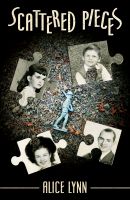
There are times when a single event can change a person's life forever. If it occurs in latter years, the impact, though not lessened, finds fewer days upon which to cast its shadow. Scattered Pieces begins on May 15, 1946 when eight-year-old Katie Harris feels her younger brother Jimmy's fingers slip from hers in a crowded train station. He disappears. What follows in this deftly penned novel is not as much an examination of the case, as a study of the effect of one split second on the lives of Katie and her family and friends. It is a book that I tried numerous times to put down at the end of a chapter only to find myself involved, concerned, and curious enough to keep turning pages. Lynn does a solid job of introducing complex psychological concepts and uses a well mixed and believable group of characters to portray human quarks and foibles akin to those we see in our own tribes. I was moved throughout the story by the depth of Katie's emotional struggles as she maneuvered through life with the weight of her enormous and painfully human guilt.

The above text is from a review I wrote about Alice Lynn's third novel, Scattered Pieces. It was also the third Lynn book I had the opportunity to read. I'll share more about those shortly. First, meet Alice Lynn.


A native Oregonian, Alice was born in 1937 into what she calls 'a marriage on the verge of divorce'. Within two months of her arrival, she and her four siblings found themselves living with their mother in Salem, Oregon. Though physically distanced by the break up, the family remained close. Alice recalls with gratitude that honor and courtesy were among the values provided by her parents, along with a love for poetry, art, music, and literature. Growing up in a small Willamette Valley town, Alice's interests ranged from horseback riding and amateur theatrics, to sculpting, gardening, and sewing. Her love of books was a gift from her mother, and her passion for writing began when after discovering Nancy Drew and Tom Sawyer, she wrote her first story. For Alice, writing came without effort, and although other interests, such as painting and drawing, provided creative release, the passion to write burned on. That passion helped her not only to create, but to survive the unimaginable, the loss of two children in separate, tragic accidents. Like that of the protagonist in Scattered Pieces, they were moments that changed her life forever.

My Joseph was a romantic. He was handsome, kind, and funny. He could tell jokes that made you laugh. He could relate a story so poignant it would make you cry. So today as I brought flowers to the place where his ashes are interred and looked at beautiful young face smiling from the photo beneath his name, I still could not believe he has truly departed from this world.

What do you say to a loved one who passed on? Can he or she hear what you say? Can they see your face as you say it? Nevertheless, I turned my gaze to the clear blue sky and asked that however far he has traveled in that mysterious realm that awaits us all, that he return to greet me as I cross that boundary. I could almost see him, a glowing figure surrounded by a nimbus of light, a vision to sustain me until that wondrous day.

As I write these lines, my classical radio station begins Danny Boy, one of the songs played at Joe's service. A message? I’d like to think so.

In what might seem a major shift from her creative inclinations, Alice went back to school and graduated with a degree in psychology from Marylhurst University in 1999. Today, she lives in Beaver Creek, Oregon with her husband and cats, and is working on her fourth novel to be released in 2012. It has been a gift for me to meet so many wonderful local authors, to read their books and discuss the painful, joyful, and often insane process of writing. Alice is a wonderful addition to that very special gift.

The Books
Scattered Pieces
Alice calls herself a dreamer. Since all of her stories were inspired by dreams, I'd say that is a fairly accurate description. Her most recent title, Scattered Pieces, was actually derived from two separate dreams. One concerned a little boy who became separated from his father at a train station, and in the second, a little girl appeared wheeling an empty buggy and looking for her brother.

Publisher's description:
When Katie’s little brother is snatched in 1946 it tears her family apart. It’s only through her friendship with the irrepressible Marilyn and Marilyn’s handsome brother Tom that she navigates a lonely childhood. In college, studying psychology helps Katie understand her mother’s mental illness and her own fears. And it leads to a client who may know something about her brother’s disappearance.

The print book will be released soon. Digital versions are available at Amazon.com, Barnes & Noble, and Smashwords.


Wrenn, Egypt House
Wrenn, Egypt House is described by the publisher as historical romance, but to me, the story of Wrenn Bartlett is an adventure. She is a headstrong, passionate woman at the turn of the century, a time when those qualities were considered a detriment. The story takes place in Portland, Oregon and New York City. As a new comer to the northwest, I found the history of the area and the detailed descriptions of the Lewis and Clark Exposition in 1905 fascinating and informative. As in all Lynn's books, there are a number of unique characters who are believable enough to love or hate, whichever is appropriate, and skillfully constructed settings disappear into the background unnoticed.

Publisher's Description
Wrenn, Egypt House is a journey of romance and personal growth set in turn-of-the-twentieth-century Portland, Oregon. Wrenn fell in love with Egypt House as a child. Later, through a connection with the Hunters, who own the great mansion, she finds that relationships, however ideal on the surface, have hidden depths and secrets. You don’t always fall in love with the right man—at first. Wrenn’s adventures lead her to New York, where she is treated to the opera, riding lessons in Central Park, and finally to heartbreak when her dreams dissolve and reality intrudes. Returning to Portland, Wrenn struggles to resume her working-class life against the backdrop of the 1905 Lewis & Clark Exposition. It is there, in The Streets of Cairo exhibition, that she realizes her destiny. Print book at Amazon.com Kindle ebook at Amazon.com


Volunteer for Glory
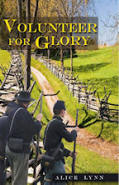
I was not familiar with battles and events during the bleak time in our nation's history known as the Civil War, and to be honest, I wasn't sure if I would enjoy a historically accurate account. I couldn't have been more wrong. Volunteer for Glory is a well researched historical novel, but it is also, I'm guessing, an accurate glimpse into the hearts and minds of not only the volunteers, but those left behind who struggled to keep families and farms together. Lynn transported me to another time and place and once again gave me a great story and a well rounded history lesson.

Publisher's Description
Civil War historical data and battle scenes mix with scenes of life during wartime. When Rachel's husband, Stuart, joins the Union cavalry after Fort Sumter, she will have to find the grit and determination to survive on their small Illinois farm. What she doesn't expect is to fall in love with a handsome young neighbor. United in war, the two men are divided by love for the same woman. Who will Rachel choose? Or will the war make the decision for her? Available at Amazon.com Available at Barnes&Noble


Alice's thoughts and a few tips on writing from an interview with LJ Kentowski on L.J. Writes

I love seeing events and characters unfold in my imagination and take shape on the page. And it’s pure bliss when things come together in a serendipitous flow.

I think the first thing is to forget the great authors. Read them, yes. Admire them, yes. Learn from them, yes. Then forget them. Write out of your own heart and vision. If you are genuinely moved and intrigued by your story and characters, it is likely other people will be as well.

Last, never skimp on rewrites or edits. Join a critique group you’re comfortable with. Enlist fellow writers or avid readers to read your beta versions. Express yourself as well as you possibly can. Once your manuscript is relatively polished, you can install a voice program in your word processing program that will read each sentence aloud. It’s not great theater, but if you follow the script as the voice pronounces each word, you will more easily find typos, missing or extra words, and tense inconsistencies. You’ll hear and see it when sentences or paragraphs don’t make sense; or not the sense you wanted.

Why Alice writes
Maybe because I'm greedy.  I want to live more than just one life.  When I write, I can put myself into another person and explore their world and their thoughts. 

On reading
It's a great way to time travel.  You can live in the past, in different countries and cultures; you can even live in the future.  It's all about adventure.
 
Connect with Alice online:


In the April of 2012 When Wise Women Speak, Alice will offer a guest blog on the remarkable story of her mother's immigration from Siberia. It is an amazing story. Please be sure to check back.

Thursday, September 1, 2011

Rosalie Sorrels

Beloved folk singer Rosalie Sorrels died on Sunday, June 11, 2017.  
Her legend will live on for generations.

Oh I have loved just like a child
On My Last Go Round
Rosalie Sorrels "Last Go Round"


Rosalie Sorrels
I turned the television on a few nights ago and before the picture came in, heard an unmistakable voice—Rosalie Sorrels. To my delight, I had tuned in at the beginning of an hour-long PBS show 'Rosalie Sorrels: Way Out in Idaho', featuring one of the most unique and memorable performers I have ever experienced.

Known predominately as a singer and songwriter, Rosalie Sorrels is also a respected folklorist. She was born in Idaho to a family of readers and musicians, and began collecting traditional folk songs as a child. At 78, her passion for gathering and sharing the history that these songs preserve continues. She hadn't planned to be a folk singer, but when her marriage ended in the mid 60s, Sorrels loaded her five kids in the car and took off. It was the beginning of what would be a lifetime on the road for the 'Travelin' Lady'.

I have had the good fortune of attending two live performances by the artist. The first, thirty years ago in Fort Collins, Colorado, and again four years ago in Albuquerque, New Mexico. You don't go 'to see' Rosalie Sorrels. From the moment she speaks, you are drawn into the world of stories and songs she shares. She is a great entertainer, but above all, she is authentic. In an era of high tech hype and slick performances, her pure and simple music and storytelling make her a powerful communicator. At both shows I was struck by that power. At the second show, I was also struck by the fact that in the twenty-five years since I'd last shared that experience, she had survived a brain aneurism and breast cancer.

Rosalie prefers small stages, intimate arenas. She likes to see her audience and communicate with them. I had a sense that she was as glad to be there as we were—that singing to us was important to her. I felt liked and special. You can't ask much more from a performer.

It is no exaggeration to say her voice is distinctive. There is a video on YouTube that mistakenly identifies a singer with Jerry Garcia at Woodstock as Mimi Farina. I laughed at the number of people commenting who identified Rosalie solely by her voice. That voice has been described as "an instrument as mellow and finely aged as an antique viola." The Boston Globe called her “one of America’s genuine folk treasures.” Gamble Rodgers called her the "hillbilly Edith Piaf". Studs Terkel said "Rosalie Sorrels sings songs the way you've always hoped they'd be sung: Deeply felt, effortlessly, and altogether loverly." Bruce Utah Phillips admired her ability to "get into the guts of a song." The Chicago Reader wrote, "Sorrels has decried the music industry's attempt to homogenize women and ethnicity into something blander. She's living proof that there are some things the biz just can't whitewash." Deeply moved by her performance, the late John Wasserman, entertainment critic at the San Francisco Chronicle commented "She did something that only the best can ever do; she brought back memories that we never had. She's one of the genuines, Rosalie Sorrels is." Others have described her vocals as 'well weathered and wise; real substance; true and powerful; a grain of crusty toughness; a voice that "cuts like a knife and purrs like a kitten".  

No, she isn't a household name, and I'd be curious to see how she would do at an audition for one of today's 'star' shows, but those who know folk music know Rosalie Sorrels. In 1990 she received The World Folk Music Association's Kate Wolf Award. With the new millennium came an honorary Doctorate of Fine Arts from the University of Idaho, and in 2001, The Boise Peace Quilt Project presented her with a peace quilt. In 2005, her album 'My Last Go Round' received a Grammy nomination for Best Traditional Folk Album, and in 2008, although officially retired, she recorded 'Strangers in Another Country', her tribute to lifelong friend Bruce Utah Phillips. It received another Grammy nod. In 1990 she published the 250 page book 'Way out in Idaho: celebration of songs and stories'. The contents came from hundreds of people who Sorrels met as she traveled across the state. She did what she does best, watched, listened and collected their stories, songs, poems, recipes, interviews, and photographs. It includes sheet music for 85 songs, and lyrics for many others. 

Today, she lives in a log cabin her father built near Boise Idaho. She still performs, and still collects songs, and yes, still enriches the lives of those who have a chance to see or hear her. 


As I write, I'm listening to her sing Malvina Reynolds' song 'Magic Penny'.
It's just like a magic penny,
Hold it tight and you won't have any.
Lend it, spend it, and you'll have so many
They'll roll all over the floor.

For love is something if you give it away,
Give it away, give it away.
Love is something if you give it away,
You end up having more.

When the credits rolled at the end of 'Rosalie Sorrels: Way Out in Idaho' I noticed that it was produced by Idaho Public Television and funded in part by the Idaho Humanities Council. I shivered thinking of recent efforts by politicians to cut into or completely eliminate these kinds of programs. Rosalie Sorrels is a hero, a patriot, a woman who tells and preserves the history of this nation, of its PEOPLE. It is frightening to think that her legacy might not survive.

"If you treat your children like they are the most interesting people you know, they probably will be." Rosalie Sorrels

Jean Sheldon

Friday, July 1, 2011

Judy Stone

Meet Dr. Judy Stone, a friend for over thirty years. After I asked her to join the 'Wise Women' ranks and received her musings, I realized there was more than a blog in her story. We discussed it and decided to publish her memoir. So here is a brief introduction to my dear friend, and a bit of a teaser for her book, 'A Stone's Throw' which will be out in the near future.


My life began in 1939 at St. Vincent's Orphanage in Chicago where my parents, Lee and Dorothy had, two years earlier, adopted my brother, Terry. I grew up in a loving supportive home, a two flat on Chicago's west side around Cicero and North Avenue. My mom died when I was 11, leaving dad as a single parent. His sister, my Aunt Mary, became an ever presence in my life. She had worked her way through a teacher's college, not a common accomplishment for women at the time, and then survived the depression. She was determined to help me achieve more. We met for dinner one night and she showed up with a handful of college brochures and the suggestion that I would do better at a smaller school. I had never considered college a reality, but what a wonderful reality it was. I graduated from MacMurray College in Jacksonville, Illinois in 1961.

I flourished there, learned how to play hockey, became student body president, and amazingly the May Queen (you have to know me to truly enjoy that). We had wonderful visits from the likes of Graham Green, and William Warfield, who talked the administration into having his wife, opera singer Leontyne Price sing for us. Seeing, and more importantly, hearing her was incredible. It was the late 50s and we had only two African American students. She had such a presence and regal bearing. None of us had heard much if anything about her, but there was a sense even before she sang, to start applauding because she was going to knock our socks off. She did! I did not even leave my seat during intermission.

After graduation, I spent a year teaching in New York—no teacher training in my background because I was a liberal arts/psychology major, but I had no clue as to what I wanted to do. Then on to California where I spent a year in Palo Alto using the skills that high school had provided—great typing and stenography—while in my position as personnel assistant, okay, secretary.

In 1963 I was accepted into the Peace Corps. When I received a telegram from Sargent Shriver asking me to be a volunteer in North Borneo/Sarawak, I had no idea where I was headed. Thankfully the head honcho at Eastman Kodak where I worked was a National Geographic reader and clued me in.

As one of the earliest groups to go overseas we were known as "Kennedy's Kids". We were in training on the island of Hawaii when we heard the news of the president's assassination. I remember that it was our last day of teacher training and we were all given tons of leis. When we got back to our training site there was a virtual mountain of them, discarded as we came in the door because there was no cause for the celebratory nature of the gifts.

My first assignment was to the island of Labuan off the coast of the newly named Sabah. We lived in government housing provided to all teachers and my duties were in a boy's school run by Dutch priests who also ran an orphanage. Teachers were Chinese, Malays, Indians (from India), Australian, British and now one American. The next year, I was transferred to the village of Melalap. Suddenly I was in a very remote place, the first Peace Corp volunteer to be there. On Labuan we had electricity, indoor plumbing, an indoor shower (cold water only), and a kerosene stove that had three burners. Melalap had none of those. For the first few months I did not have a kerosene stove or lights and when the sun set—so did I—often with two mosquito coils on either side of my head on the pillow.

It was quite a year, replete with a few king cobras visiting (and one queen) and an eclipse. This is of note because without warning of such one is not prepared. We were all surprised by the sudden and massive drop in temperature and students looking out the door said "Look teacher there's a star" I assumed they were just confused and using the wrong word. Duh—when I realized what was happening we looked at it properly, after probably ruining our eyes a bit. That afternoon no one came to school, but the word had spread that "Teacher said it was okay and she was going to explain it the next day and not to be afraid." I had to find out the Malay word for planet earth as the story could not be understood in English.

Leaving there filled me with great sadness. It had been such a wonderful year. My students loved me as I loved them and I had made many friends including the native chief and his wife who lived the closest to me. I had a chance to return there some years later.

I returned to the United States and worked with Job Corps in DC—a program to train and educate high school drop-outs. Terrific when it works but it was time for me to get on with my education. George Washington University turned me down by saying they were not accepting women that year and American University, also in DC, would not help with tuition as all assistantships were being given to men. I received my master's at Bowling Green in Ohio.

I left academia once again for Asia where I was director of the first total in-country training program in Thailand and was then recruited for Nepal. After receiving training there I trekked into the Himalayas with three other Thai volunteers, one Sherpa, and a young man who had escaped from Tibet. There were many incredible sites on this trip, but one more memorable was my first sighting of Everest reflecting the morning sun. The trip was the most arduous I have ever taken but the most rewarding. I had lots of time to myself. We did not talk much during the days as going up was to breath-taking (in many ways) and going down was too painful. In fact we looked forward to the days when we were going up.

I became a world traveler for one year spending months in Asia, then Africa, and finally Europe, eventually ending up back in Chicago to finish my Ph.D. at Loyola. Life had other plans, and prior to completion I was involved in a near death accident. So near that I came to once and a priest was giving me the last rites. I had enough presence of mind to say "Father I am not ready for that", glad that I was more right than he about my need for help into the hereafter. I stayed in the hospital for 130 days, but eventually claimed my doctorate.

You can see why I wanted to publish Judy's memoir. The more I read, the more questions I had, and the more I wanted to know. But her story doesn't stop with her years as a mental health consultant to Job Corps, as a volunteer and training and selection person for Peace Corps, her experiences as a eulogist, or her years as a clinical psychologist in Chicago. In fact, there is another amazing story in the last chapter, 'And Then There Were Ten'.

I mentioned I was adopted, and in the early 1990s, after years of searching I found the woman I was pretty sure was my mother. A man answered the phone that historic occasion and not knowing if he even knew of my existence I asked to speak to Rita. Upon mentioning my birth date and the belief that she was my mother she said "Oh my child, I have prayed for you every day of your life (about 50 of them at the time)". Well my heart was setting records when I heard her say to him "This is the little girl we gave up" As it turned out, George and Rita Busse married about three years after my birth and went on to have nine other children. And so in many rapid heartbeats I went from never knowing a blood relation to being the oldest of ten full brothers and sisters. It is rare for adoptees to have this kind of experience—most tend to find only their mother. When I went to see them, my father was waiting at the top of the stairs and said "I would have known you were one of ours from the moment you got out of the car—you look just like your sister Margie".

Watch here for more information on 'A Stone's Throw'.

Sunday, May 1, 2011

Willa Cather

All human history is a record of an emigration, an exodus from barbarism to civilization; from the very outset of this pilgrimage of humanity, superstition and investigation have been contending for mastery. Since investigation first led man forth on that great search for truth which has prompted all his progress, superstition, the stern Pharoah of his former bondage, has followed him, retarding every step of advancement.
Above is the opening paragraph of a speech Willa Cather made at her graduation from Red Cloud High School in June of 1890. She was sixteen and wrote it in response to those who criticized her interest in biology and science. You can see the entire text at Superstition VS. Investigation by Willa Cather.
Yes, I know, there are hundreds of websites filled with information about this great American writer, including, The Willa Cather Foundation and the University of Nebraska Willa Cather Archive, along with articles, blogs, and book reviews. This brief summary is only to acquaint those who haven’t read her work, and reacquaint those who have, to one of my favorite authors.
Willa Cather, born in Virginia in 1873, was most famous for her stories of immigrants who pioneered the American Midwest. Her family moved to Nebraska in 1882 when Willa was nine. A few years later, she took a job delivering mail on horseback to farms in the community, an experience that allowed her to become personally familiar with the diverse cultures settled there. When the Cather family moved from their unsuccessful farm into the town of Red Cloud, she met neighbors whose influence on her life was more intellectual and artistic, but equally profound. Many of them, along with those to whom she delivered mail, would become models for her future characters. She wrote, I don't gather the material for my stories....All my stories have been written with material that was gathered—no, God save us! Not gathered but absorbed—before I was fifteen years old.
Following high school, Willa enrolled at the University of Nebraska’s preparatory school to study science. It was only after one of her professors submitted a paper she wrote for publication that she considered a career in journalism. In 1893 she became managing editor of the Hesperian, the college literary digest and began writing columns for the Nebraska State Journal.
During her years at the university, Cather did what many college students do—searched for her identity. She experimented with her writing and her looks. For the latter, she cut her hair short, wore men's clothing, and signed her name William Cather. These actions, hardly revolutionary today, were outrageous for a woman of the late nineteenth century, but so was a woman wanting to write. Her early writing, along with the literary criticism and essays, included a book of poetry, April Twilights, and a collection of short stories called The Troll Garden published in 1905. In 1906, she moved to New York and joined Edith Lewis, who would be her companion for the rest of her life. She also became an editor at McClure's magazine where she stayed until 1912 when she began writing full time. It was that year that her first novel, Alexander's Bridge, (originally Alexander's Masquerade) appeared in McClure's. During a trip to the southwest, Cather was struck by sudden inspiration and began writing the pioneer novels that would bring her greatest fame, O Pioneers! (1913), The Song of the Lark, (1915), and My Antonia (1918).
Here is the chronology of books that followed.
Youth and the Bright Medusa a collection of short-stories 1920
One of Ours published in 1922 won a Pulitzer Prize the following year.
A Lost Lady 1923
The Professor’s House 1925
My Mortal Enemy 1926
Death Comes for the Archbishop 1927
Shadows on the Rock 1931
Obscure Destinies, a collection of short stories 1932
Lucy Gayheart 1935
Not Under Forty, a book of essays 1936
Sapphira and the Slave Girl 1940
The Old Beauty and Others, a collection of short stories 1948 published by Knopf a year after her death.

There is a sparseness to Cather's books. Not something forgotten, but the intentional clearing away of debris to allow the story full reign. In an article written for The New Republic called The Novel Démeublé she wrote: How wonderful it would be if we could throw all the furniture out of the window; and along with it, all the meaningless reiterations concerning physical sensations, all the tiresome old patterns, and leave the room as bare as the stage of a Greek theatre, or as that house into which the glory of Pentecost descended; leave the scene bare for the play of emotions, great and little—for the nursery tale, no less than the tragedy, is killed by tasteless amplitude.
If you have read her stories, you know how effectively 'unfurnished' they are. Cather once said that after seeing a mural by Pierre Puvis de Chavannes she wanted to create the same effect with a story.  “…something in the style of legend…with none of the artificial elements of composition…the mood is the thing."
It is 'the mood' I find most attractive in her writing. A line in the epilogue of her first novel, Alexander's Bridge, answered an age old question for me. Are we the person we perceive ourselves to be, or the one that others see? Wilson shook himself and readjusted his glasses. "Oh, fair enough. More than fair. Of course, I always felt that my image of him was just a little different from hers. No relation is so complete that it can hold absolutely all of a person."
In My Antonia, the narrator pens a manuscript called 'Antonia', to which he hastily adds 'My' as he passes it on to a friend. In his text he recounts his childhood journey to Nebraska and parts of his life shared with Antonia. The story, the struggle of immigrant farmers in harsh, unforgiving land and times, is a classic work. H.L. Mencken wrote, No romantic novel ever written in America, by man or woman, is one half so beautiful as My Antonia.
It is difficult to pick a favorite, but if I had too, I might choose The Song of the Lark, which is the story of a young woman's struggle to become an opera singer, and Death Comes to the Archbishop, which I read again after having lived in New Mexico for a few years. She completely captured the 'sense' of the area. For someone new to Willa Cather, I would say My Antonia is a good place to start, but do start.

Willa Cather died of a cerebral hemorrhage on April 24, 1947, at their home in New York and was buried in New Hampshire. At the bottom of her large gravestone is a quote from My Antonia: "that is happiness; to be dissolved into something complete and great."

Friday, April 1, 2011

Eleanor Louise Sheldon


This month features one of my favorite 'Wise Women', Eleanor Sheldon, Mom. When I announced my plan to highlight her in April for her 82nd birthday, she wasn't sold on the idea. She felt that since the other guests were writers, she didn't belong. It's a good thing this is my blog. Happy Birthday, Mom!

On April 29, 1929, Eleanor Louise Owen first shook the bright curls that would earn her the nickname 'Red'. She was born in the boarding house her mom and dad owned on Marshfield and Harrison in Chicago. If you go there today, you'll find Rush Library and Medical College. My grandparents lost the building a short time after mom's birth when the stock market crashed and tenants could no longer pay their rent. They didn't have the heart to evict anyone.

What I remember most is laughter. Mom has a knack for not taking herself or life in general too serious. When I was in high school, the coach for our volleyball team had to drop out and we needed an adult to replace her in a hurry. Mom knew nothing about volleyball and her idea of exercise was raising four kids and dancing, but she volunteered. We were the worst team in the conference and had a very short season, but no team had more fun. After missing a relatively easy shot, I looked over to the sidelines ready to be chastised. Instead, I saw 'the coach' trying to hide her laughter and urging us on. What a great lesson for a fifteen-year-old—winning IS NOT everything—the joy is in playing.

As in all families, there were times without laughter. One of those was in May of 1968 when my brother Bill died in Viet Nam. Even now I cannot fathom the pain my parents felt losing their nineteen-year-old son. "You are not," Mom said through her tears, "supposed to live longer than your children."

Mom was a typical teenager in Chicago during the challenging years of World War II. Too young to work in the factories, she took a job as a waitress at the local drug store and spent her evenings doing what she loved, dancing at the USO. She and her best friend had another passion. For over 60 years, Chicago was home to one of the nations then largest amusement parks, Riverview. She and Charlotte would walk the 12 miles to and from the park to spend their day off ignoring the frightening news of the war, eating cotton candy and foot long hot dogs, riding "The Bobs", a roller coaster with an 85-foot drop, and checking out the servicemen there on leave.

It wasn't until after the war when her family made a brief move to Wilkes Barre, Pennsylvania that she met the serviceman of her dreams. On her way to her aunt's where she was staying, she spotted William Sheldon on his front porch. He had just returned from the Navy. She knew at that moment he was the man she would marry and when her family returned to Chicago, 'Billy' followed. They were married in 1947.

Because of her family's move, Mom dropped out of school. Years later she returned to high school and graduated as valedictorian of her night school class. It was a proud moment for all of us when she gave her speech on the stage where my brothers and I graduated.

Dad worked as a computer programmer, so mom was no stranger to the 'new' technology. She took an entry level position as a key punch operator and moved up the ranks. Before long, she was writing procedure manuals for developing positions in the computer industry. An industry, which she often reminded us, paid women half the salary for the same job as men. Any wonder that I'm a feminist!

While writing this article, I looked through photos and memories and tried to see Eleanor Sheldon not as my mother, but as others saw her. A red-haired beauty who raised four children, worked full time both outside and inside her home, and now, an eighty-two year old woman, mother, wife, grandmother, friend, and perhaps many other sides I will never know.

As I looked back over the years, I remembered when my brother Bill at around age ten came home with blood pouring from a gash in his head. Mom stayed focused and handled both the crisis and her slightly hysterical daughter. I remembered when our faithful dog, Hoppy, had a seizure in the yard and mom knelt at his side, cooling him with water, talking to him, and soothing him until he recovered. I remembered her cooking, cleaning, keeping the books, washing and hanging laundry, dancing, singing, drawing, going to work, and oh yes, I remembered her laughter. The memories of those and other incidents make it impossible for me to guess how others might see her. That's okay. I see her as I always have—remarkable.

The other day, after I had written much of this article, my parents dropped by to help me hang drapes. It was comical as the three of us worked through our collective 'senior moments' and managed to get the rods and drapery hung fairly straight with few injuries. Mom kept track of where Dad and I left the tools, rulers, hardware, etc; she crawled on the floor to talk to my cat under the bed, less than pleased with the disturbances; and she quickly solved a problem Dad and I made far more complicated than it was, saving us additional work and frustration. Mom can do that. Mom can do an amazing number of things. A few years ago, after I had written my first mysteries, Mom, an avid reader, decided she'd like to try her hand at writing. She's working on her second story. You see, Mom, you do belong here.

 The human race has one really effective weapon, and that is laughter. Mark Twain